5 Narrow Side Yard Landscaping Ideas

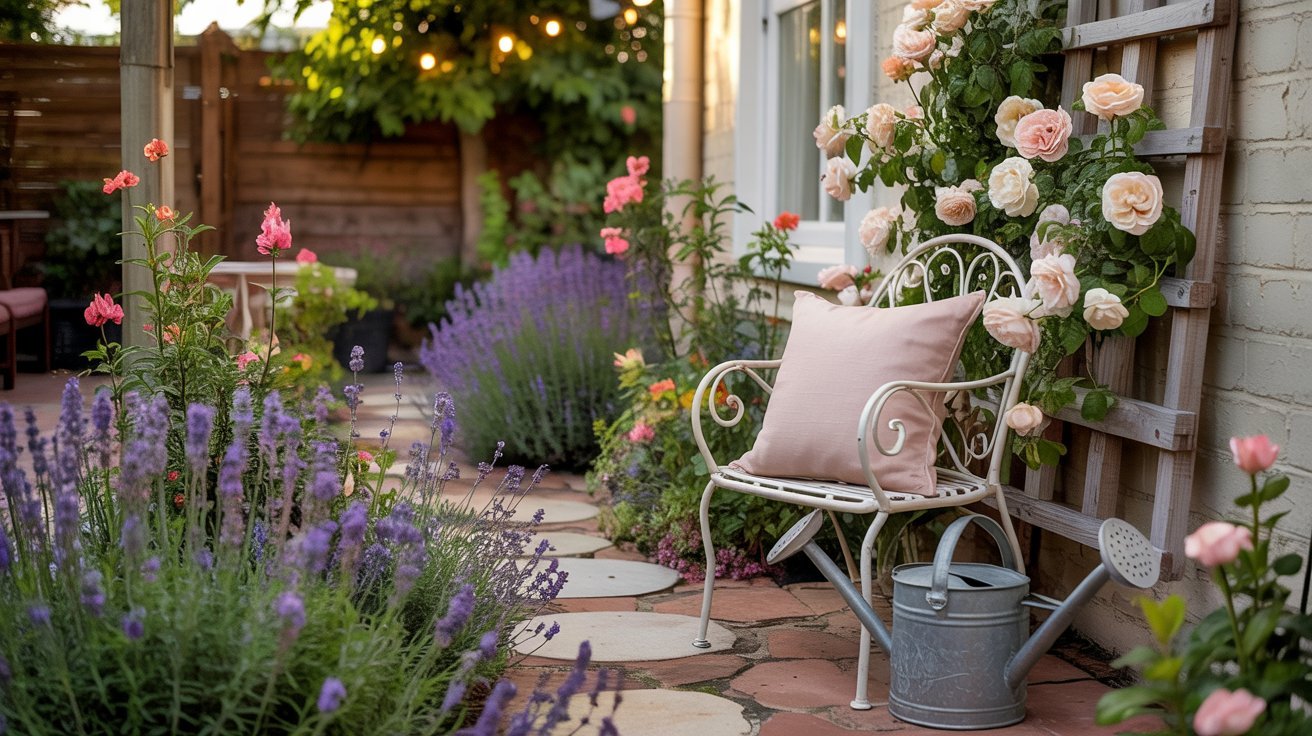
That forgotten strip of land between your house and the property line holds untapped potential. Narrow side yards often become neglected passages, but with thoughtful design, these slim spaces can transform into functional, beautiful extensions of your home. Whether your side yard is a shadowy corridor or a sun-drenched sliver, this narrow side yard landscaping guide will walk you through five smart solutions to maximize every inch of this overlooked area. From clever pathway materials to space-enhancing lighting and perfect plant selections, you’ll discover how to turn your narrow side yard into a garden feature worth showing off.
Understanding the Challenges of Narrow Side Yard Landscaping
Before diving into solutions, it’s important to recognize the unique challenges that narrow side yards present. These spaces often suffer from limited sunlight, restricted width, and high foot traffic. Many homeowners struggle with poor drainage, lack of privacy, and difficulty maintaining plants in these confined areas.
Typical narrow side yard challenges: limited space, poor light, and difficult access
The good news? With the right approach, these challenges become opportunities for creative narrow garden design. The confined nature of side yards actually makes them perfect candidates for cohesive, impactful landscaping that can enhance your home’s overall appeal.
1. Smart Pathway Materials for Narrow Spaces
The pathway is the backbone of any side yard design. In narrow spaces, your material choices become even more critical, they must be functional while creating the illusion of more space.
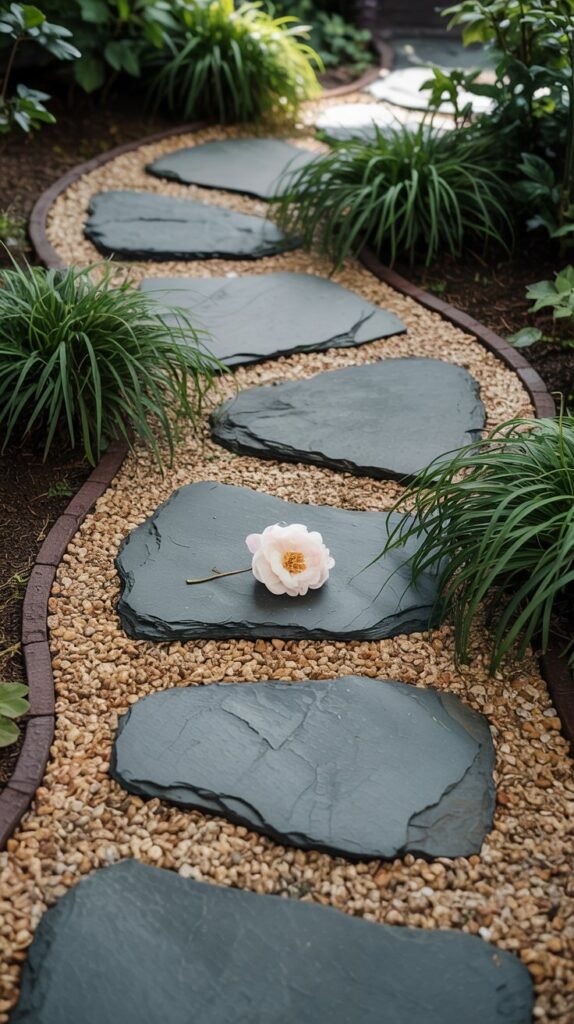
Best Materials for Narrow Side Yard Pathways
| Material | Benefits | Best For | Maintenance Level |
| Stepping Stones | Creates illusion of width, allows for planting between | Low-traffic areas, informal gardens | Low |
| Pea Gravel | Permeable, crunchy sound alerts to visitors | Drainage-challenged areas, cottage gardens | Medium (needs occasional raking) |
| Concrete Pavers | Durable, wide variety of patterns | High-traffic areas, modern homes | Low |
| Flagstone | Natural appearance, can be cut to fit | Traditional homes, irregular spaces | Low |
| Brick | Classic look, durable | Traditional homes, formal gardens | Medium (watch for moss in shade) |
Design Tips for Narrow Pathways
- Lay pathways at an angle or with gentle curves to create the illusion of greater width
- Use materials with contrasting colors to draw the eye through the space
- Consider a “ribbon” pathway, a narrow strip of one material bordered by another
- Ensure proper drainage by slightly crowning the path or installing a French drain alongside
- For extremely narrow passages, use a consistent material throughout to avoid visual clutter
Remember that your pathway doesn’t just serve a functional purpose, it’s also a design element that guides the eye through your narrow side yard. Thoughtful material selection can make even the slimmest space feel intentional and inviting.
2. Strategic Lighting to Expand Visual Space
Proper lighting transforms a narrow side yard from a dark passage into an inviting garden feature. Strategic illumination not only improves safety but can actually make your side yard appear wider and more spacious.
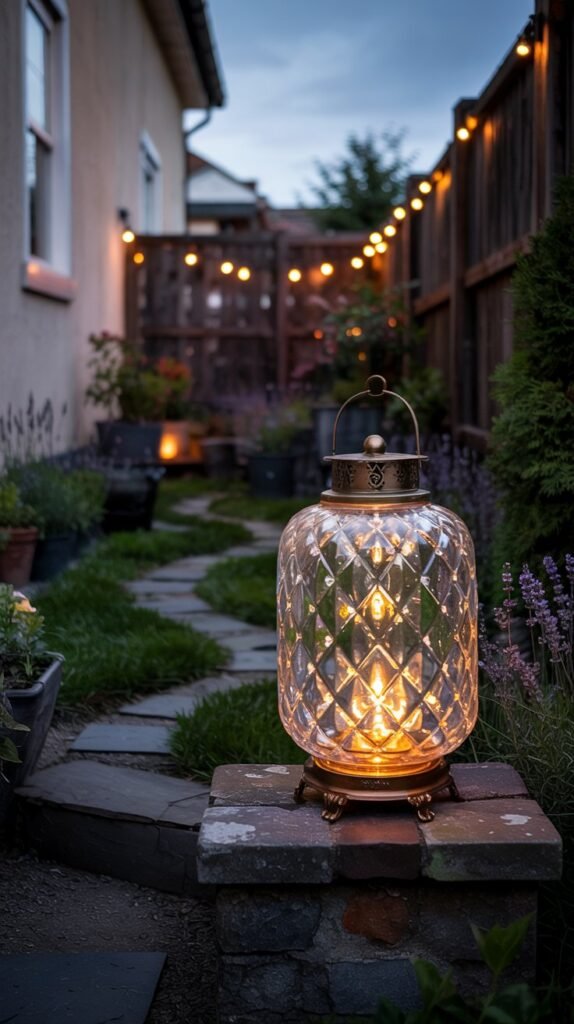
Lighting Techniques for Narrow Side Yards
Overhead Lighting
String lights suspended above create a ceiling effect that draws the eye upward, making narrow spaces feel more open. Consider weatherproof LED string lights that can be zigzagged between fence posts or from house to fence.
Path Lighting
Low-profile path lights guide movement while creating pools of light that break up the narrow space. Solar-powered options eliminate the need for complex wiring in tight areas.
Up lighting
Positioning lights at the base of vertical elements (trees, fence panels, house wall) creates dramatic shadows and texture that add perceived depth to narrow spaces.
Wall Sconces
Wall-mounted fixtures on the house side can wash light across the pathway while highlighting architectural features, effectively “pushing back” the boundaries of the space.
Pro Tip: Layer different lighting types for the most effective results. Combine functional path lighting with decorative string lights and accent lighting on key plants or features to create depth and interest in your narrow side yard.
When planning your side yard lighting, consider how the space will be used. If it’s primarily a passage, focus on safety with path lighting. If you’re creating a destination space with seating, incorporate ambient lighting that makes the area inviting in the evening hours.
3. Space-Maximizing Planting Strategies
Plant selection and placement are critical in narrow side yards. The right plants can thrive in challenging conditions while making the space feel larger and more inviting.
Best Low-Maintenance Plants for Narrow Side Yards
For Shady Side Yards
- Hostas – Variety of sizes, minimal care once established
- Japanese Forest Grass – Elegant, cascading form for texture
- Ferns – Thrive in moist, shady conditions
- Heuchera (Coral Bells) – Colorful foliage year-round
- Astilbe – Feathery flowers in shade-friendly varieties
For Sunny Side Yards
- Ornamental Grasses – Vertical interest with minimal width
- Lavender – Drought-tolerant with lovely fragrance
- Yucca – Architectural form for modern designs
- Sedum – Succulent foliage in various heights
- Russian Sage – Airy texture that doesn’t overwhelm
Vertical Gardening Solutions
When ground space is limited, think upward. Vertical gardening is perfect for narrow side yard landscaping, allowing you to maximize your planting area without consuming precious floor space.
Vertical Structures
- Trellises attached to fences or walls
- Wall-mounted planters or pocket systems
- Tall, narrow planters for architectural plants
- Hanging baskets from eaves or pergolas
Best Climbing Plants
- Clematis – flowering vine with varieties for sun/shade
- Jasmine – fragrant option for warm climates
- Boston Ivy – quick coverage with fall color
- Climbing Hydrangea – excellent for shady walls
PRO TIPS: In narrow spaces, think in layers: ground covers at your feet, mid-height plants for texture, and vertical elements to draw the eye upward. This creates depth in even the slimmest garden.
4. Creating Functional Zones in Limited Space
Even the narrowest side yard can incorporate functional elements that add value to your outdoor living. By thinking creatively about zoning, you can transform a simple passage into a multi-purpose space.
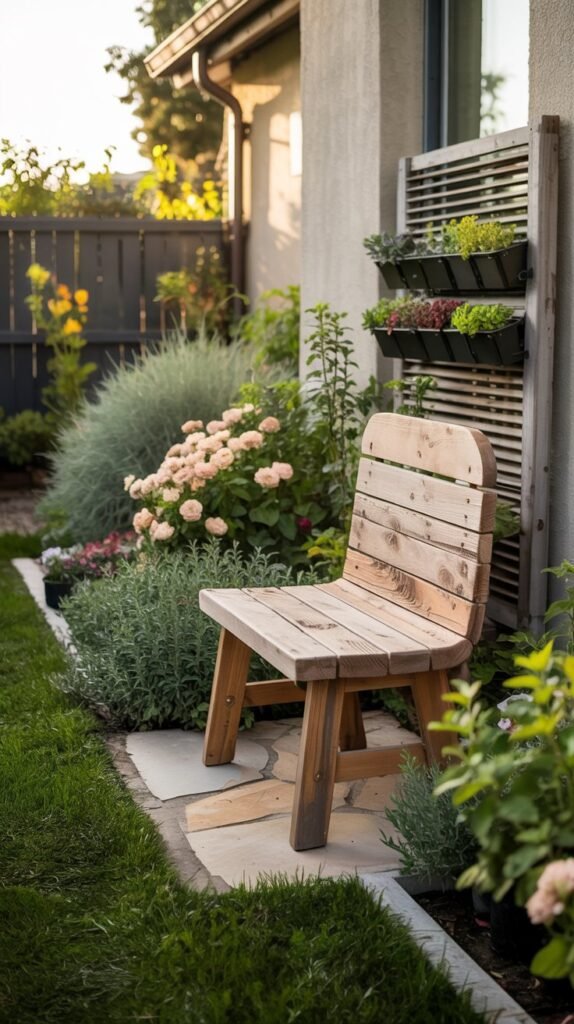
Functional Zone Ideas for Narrow Side Yards
Garden Retreat
Create a tiny seating area with a bench or two slim chairs. Add container plants and overhead string lights to define the space as a destination rather than just a passage.
Utility Area
Designate a section for garbage bins, garden tools, or air conditioning units. Use decorative screens or strategic plantings to conceal these necessary but unsightly elements.
Growing Space
Install narrow raised garden beds or vertical planters for herbs, vegetables, or cut flowers. Even the slimmest side yard can become productive growing space with the right setup.
Design Tips for Zoning Narrow Spaces
- Use different flooring materials to visually separate zones (gravel for utility areas, pavers for seating)
- Create “thresholds” between zones with archways, changes in height, or container groupings
- Consider how zones will be used in different seasons and design accordingly
- Ensure that functional elements (like storage) don’t impede the primary pathway function
- Use foldable or movable elements in extremely narrow spaces to maintain flexibility
5. Enhancing Privacy and Managing Drainage
Two common challenges in narrow side yard landscaping are privacy concerns and drainage issues. Addressing these functional needs is essential before focusing on aesthetics.
Privacy Solutions for Narrow Spaces
Creating privacy in a narrow side yard requires vertical elements that don’t consume too much horizontal space. Consider these space-efficient options:
- Bamboo or reed screening – Attaches to existing fences to increase height
- Columnar trees – Varieties like Italian Cypress or Sky Pencil Holly provide height without width
- Lattice panels – Can be covered with vines for a green privacy screen
- Tall container plants – Movable privacy that can be repositioned as needed
- Fabric shade sails – Provide overhead privacy from second-story windows
Drainage Solutions for Narrow Side Yards
Side yards often become drainage channels during heavy rain. Transform this challenge into a design feature with these solutions:
Decorative Drainage Options
- Dry creek beds with decorative river rocks
- Rain chains that direct water from gutters
- Permeable paving that allows water to seep through
- Rain gardens with water-loving plants
Functional Drainage Systems
- French drains concealed beneath gravel pathways
- Catch basins disguised with decorative grates
- Slight grading to direct water away from foundations
- Rain barrels that capture runoff for garden use
Important: Always ensure that your drainage solutions direct water away from your home’s foundation and comply with local regulations regarding runoff management.
Putting It All Together: A Cohesive Narrow Side Yard Design
The most successful narrow side yard landscaping projects combine all five elements we’ve discussed into a cohesive design that feels intentional rather than cramped.
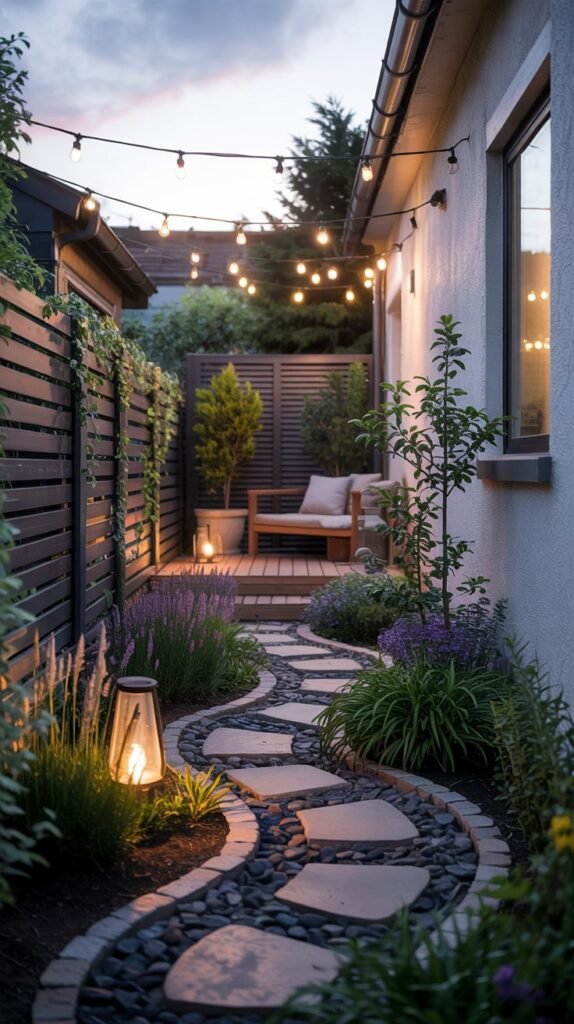
Design Process for Narrow Side Yards
- Assess your space – Measure width, note sun exposure, identify drainage patterns
- Determine primary function – Is it mainly a passage or will it serve other purposes?
- Select a cohesive style – Modern, cottage, woodland, etc. to guide material choices
- Plan your pathway first – This is the backbone of your design
- Add vertical elements – Privacy screens, climbing plants, lighting
- Incorporate functional zones – Seating, storage, growing areas as space allows
- Finish with details – Container plants, decorative elements, seasonal touches
How narrow is too narrow for landscaping?
No space is too narrow for some form of landscaping. Even passages as slim as 2-3 feet can accommodate a pathway and vertical plantings. The key is to select appropriately scaled elements and prioritize function first, then aesthetics.
What’s the minimum width needed for a comfortable walkway?
A minimum of 30 inches (76 cm) is recommended for a single-file walkway, though 36-48 inches (91-122 cm) is more comfortable. If your side yard is extremely narrow, consider stepping stones rather than a continuous path to maximize planting space.
How can I maintain privacy without making my narrow space feel smaller?
Opt for privacy solutions that don’t block light, such as bamboo screens or lattice panels with climbing plants. Position privacy elements strategically to block specific sightlines rather than enclosing the entire space.
Transform Your Narrow Side Yard Today
Your narrow side yard doesn’t have to remain a forgotten passage. With thoughtful design incorporating smart pathways, strategic lighting, space-maximizing plants, functional zones, and practical solutions for privacy and drainage, you can transform this challenging space into one of your home’s most charming features.
Remember that successful narrow garden design is about working with your space’s limitations rather than fighting against them. Embrace the intimate scale and create a garden that feels intentional, inviting, and uniquely yours.

