8 Pollinator Gardens for Small Yards

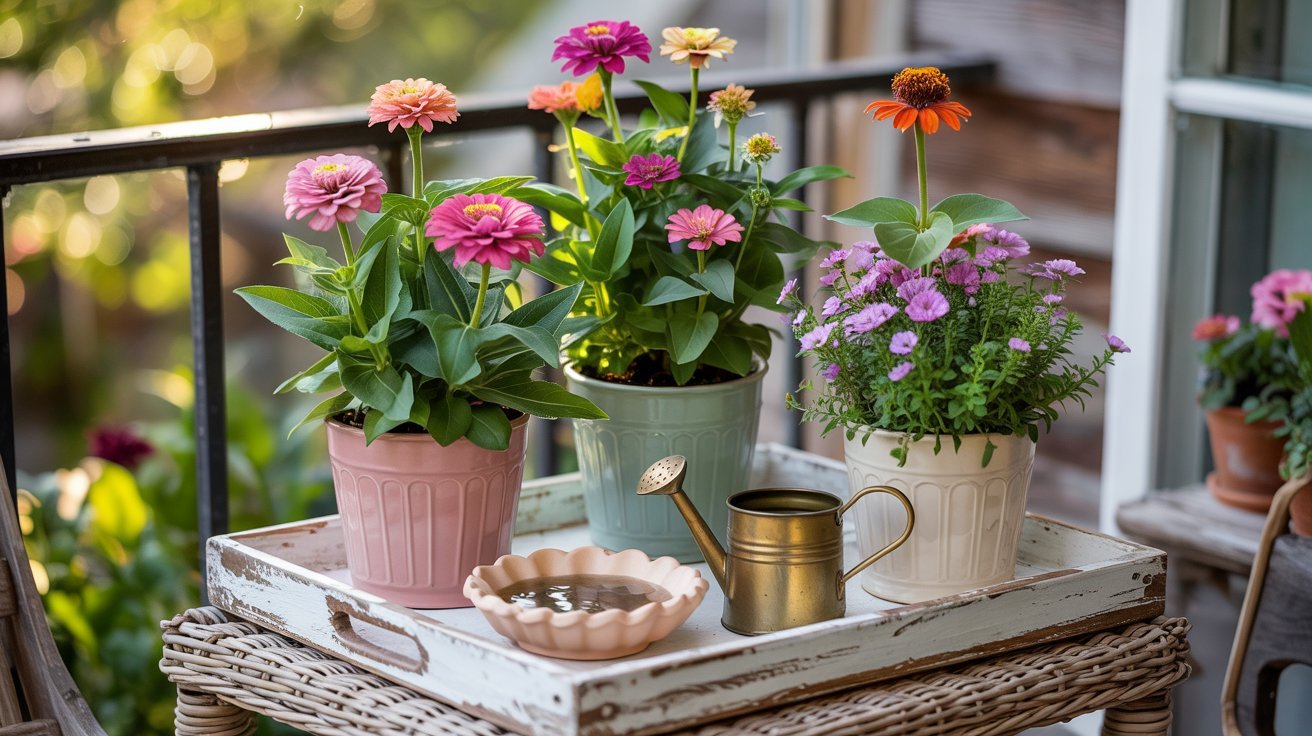
Creating a pollinator garden small space isn’t just possible, it’s a powerful way to support local wildlife in our increasingly urban world. Even the tiniest balcony, patio corner, or windowsill can become a buzzing, fluttering haven for essential pollinators. These small-but-mighty gardens create stepping stones of habitat across our neighborhoods, helping bees, butterflies, and hummingbirds find the food and shelter they need to thrive.
Whether you have a sunny apartment balcony, a small yard, or just a few containers on your doorstep, these eight specially designed pollinator pocket gardens will help you maximize bloom time and pollinator appeal in even the most limited spaces. Let’s transform your small space into a season-long buffet for our hardworking pollinator friends!
Why Small-Space Pollinator Gardens Matter
Pollinators worldwide face habitat loss, pesticide exposure, and climate change challenges. Urban and suburban areas, with their fragmented green spaces, make it difficult for pollinators to find enough food and shelter. This is where your small-space garden becomes crucial.
Even a tiny pollinator garden creates a vital “stepping stone” of habitat, helping pollinators move through developed areas. When neighbors create these pocket gardens too, they form a connected network of resources that supports diverse pollinator populations.
The National Wildlife Federation notes that pollinator gardens in small spaces contribute significantly to urban biodiversity while providing you with the joy of observing these fascinating creatures up close. Your compact garden might be small in size, but its impact on local ecosystems can be enormous.
6 Key Design Principles for Small Pollinator Gardens
Plant in Clusters
Group at least three plants of the same species together. This creates a more visible “target” for pollinators and increases the efficiency of their foraging. In small spaces, even three plants of each type makes a difference.
Choose Native Plants
Native plants have co-evolved with local pollinators, making them the perfect food source. They’re also typically more drought-resistant and require less maintenance than exotic varieties, perfect for busy gardeners.
Plan for Succession
Select plants that bloom at different times to provide food from early spring through late fall. Even in a small space, you can include early, mid, and late-season bloomers to support pollinators throughout their active seasons.
Think Vertically
Use trellises, wall planters, and hanging baskets to maximize growing space. Vining plants like native honeysuckle or morning glory can add significant habitat without taking up precious ground space.
Include Water Sources
A shallow dish with pebbles provides a safe drinking spot for pollinators. For butterflies, create a “puddling area” with damp sand and a pinch of sea salt to provide essential minerals.
Skip the Chemicals
Avoid pesticides and herbicides, which can harm the very creatures you’re trying to attract. Instead, embrace a slightly “messier” garden that provides shelter and nesting sites for beneficial insects.
8 Pollinator Pocket Garden Designs
1. Spring Awakening Container Garden
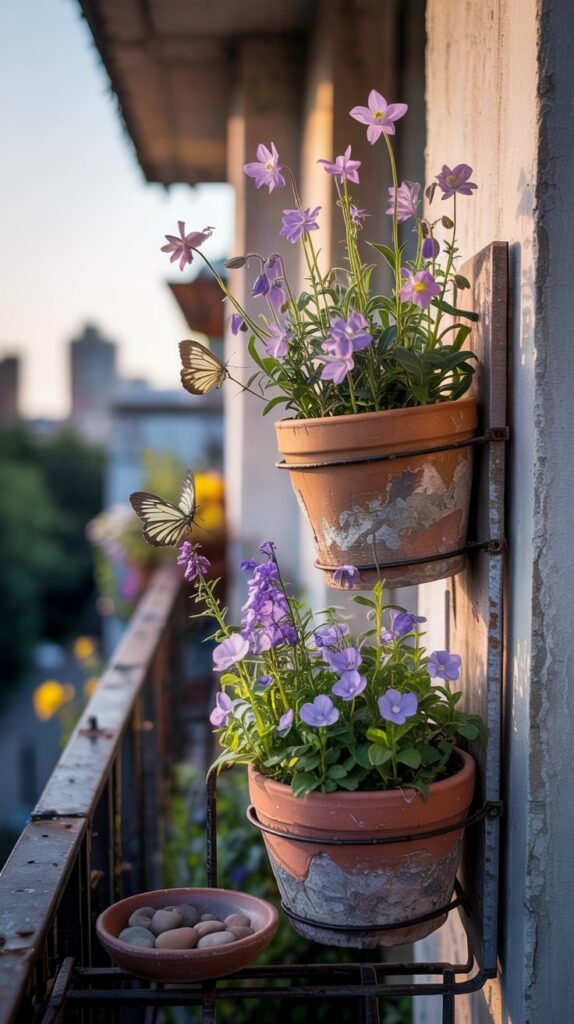
Plant List:
- Wild Columbine (Aquilegia canadensis) – early spring
- Wild Blue Phlox (Phlox divaricata) – mid-spring
- Violets (Viola spp.) – early to mid-spring
- Jacob’s Ladder (Polemonium reptans) – late spring
Garden Details:
- Layout: Group of 3-5 containers (minimum 12″ deep)
- Season: Early to late spring
- Target Pollinators: Early-emerging bees, butterflies
- Light Needs: Part sun to part shade
This early-season container garden welcomes pollinators as they emerge from winter. The succession of blooms provides crucial early-season nectar when food sources are scarce. Place containers near a wall or fence for wind protection and to create a microclimate that warms up quickly in spring.
2. Summer Buzz Balcony Garden
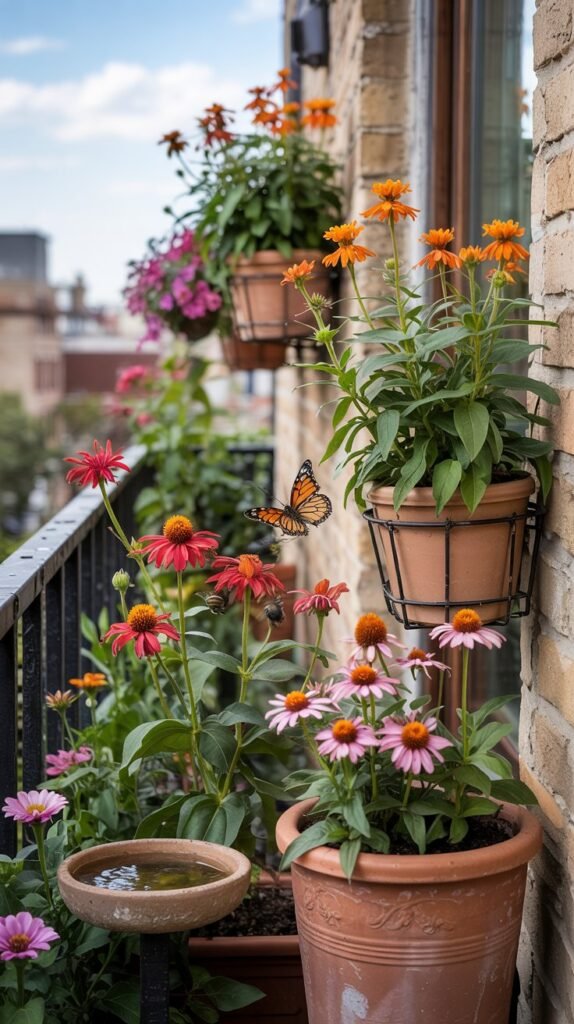
Plant List:
- Butterfly Weed (Asclepias tuberosa) – early to mid-summer
- Bee Balm (Monarda didyma) – mid-summer
- Purple Coneflower (Echinacea purpurea) – mid to late summer
- Zinnias (Zinnia elegans) – all summer
Garden Details:
- Layout: Railing planters and floor containers
- Season: Summer
- Target Pollinators: Bees, butterflies (especially monarchs)
- Light Needs: Full sun
This sunny balcony garden creates a summer oasis for pollinators. The butterfly weed serves as a host plant for monarch caterpillars, while the other flowers provide abundant nectar. Arrange taller plants like coneflowers toward the back and trailing zinnias near the edge for a cascading effect that maximizes your vertical space.
3. Autumn Glow Corner Garden
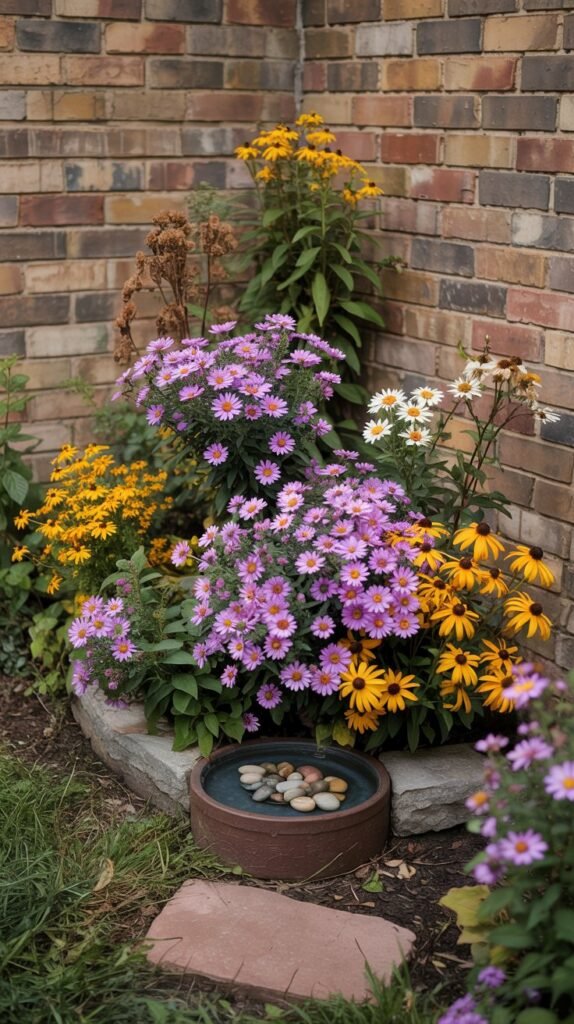
Plant List:
- New England Aster (Symphyotrichum novae-angliae) – early to mid-fall
- Goldenrod (Solidago spp.) – late summer to fall
- Black-eyed Susan (Rudbeckia hirta) – late summer to fall
- Aromatic Aster (Symphyotrichum oblongifolium) – mid to late fall
Garden Details:
- Layout: Triangular corner bed (4’x4’x5′)
- Season: Late summer through fall
- Target Pollinators: Migrating butterflies, late-season bees
- Light Needs: Full to part sun
This corner garden provides crucial late-season resources for pollinators preparing for winter or migration. The golden and purple hues create a stunning fall display while offering protein-rich pollen and energy-packed nectar. Leave the seed heads standing through winter to provide food for birds and shelter for beneficial insects.
4. Hummingbird Haven Window Box
Plant List:
- Cardinal Flower (Lobelia cardinalis) – mid to late summer
- Wild Columbine (Aquilegia canadensis) – spring
- Salvia ‘Hot Lips’ (Salvia microphylla) – summer to fall
- Fuchsia (Fuchsia spp.) – summer
Garden Details:
- Layout: Window box or railing planter (minimum 8″ deep)
- Season: Spring through fall with succession
- Target Pollinators: Hummingbirds, long-tongued bees
- Light Needs: Morning sun, afternoon shade
This specialized window box targets hummingbirds with tubular, nectar-rich flowers in bright colors. The succession of blooms ensures food availability throughout the hummingbird season. Place near a window where you can enjoy watching these aerial acrobats, but avoid locations with heavy wind that might deter their visits.
5. Butterfly Buffet Raised Bed
Plant List:
- Common Milkweed (Asclepias syriaca) – early to mid-summer
- Purple Coneflower (Echinacea purpurea) – mid-summer to fall
- Lantana (Lantana camara) – summer to frost
- Dill (Anethum graveolens) – early to mid-summer
- Parsley (Petroselinum crispum) – spring to summer
Garden Details:
- Layout: 4’x4′ raised bed (minimum 12″ deep)
- Season: Spring through fall
- Target Pollinators: Butterflies (especially monarchs and swallowtails)
- Light Needs: Full sun
This raised bed combines nectar plants with host plants where butterflies can lay eggs. The milkweed supports monarch caterpillars, while dill and parsley host black swallowtail caterpillars. Include a small dish of damp sand with a pinch of sea salt to create a butterfly “puddling station” where they can obtain minerals.
6. Vertical Pollinator Wall
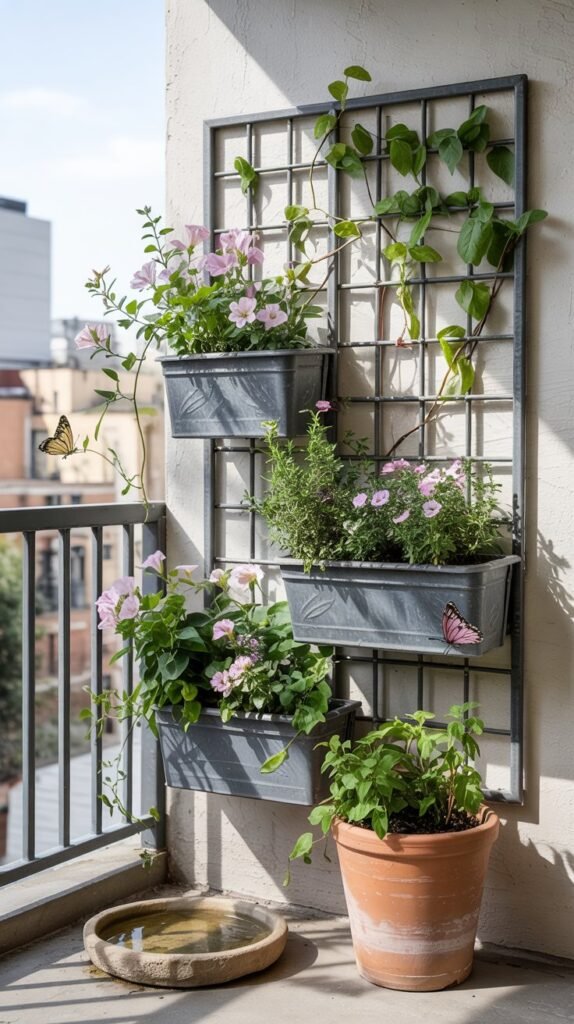
Plant List:
- Native Honeysuckle (Lonicera sempervirens) – spring to summer
- Morning Glory (Ipomoea purpurea) – summer to fall
- Thyme (Thymus vulgaris) – spring to summer
- Oregano (Origanum vulgare) – summer
- Trailing Lantana (Lantana montevidensis) – summer to fall
Garden Details:
- Layout: Wall-mounted planters, trellis, hanging baskets
- Season: Spring through fall
- Target Pollinators: Bees, butterflies, hummingbirds
- Light Needs: Full to part sun
This vertical garden maximizes limited ground space by growing upward. The climbing vines provide habitat height while the herbs and trailing flowers fill in the middle and lower levels. Allow herbs to flower for maximum pollinator benefit. This design works beautifully against a fence, wall, or railing.
7. Pollinator Pathway Border
Plant List:
- Blazing Star (Liatris spicata) – mid-summer
- Bee Balm (Monarda didyma) – summer
- Black-eyed Susan (Rudbeckia hirta) – summer to fall
- Catmint (Nepeta × faassenii) – spring to summer
- Aster (Symphyotrichum spp.) – fall
Garden Details:
- Layout: Narrow border (2′ wide x 6-10′ long)
- Season: Spring through fall
- Target Pollinators: Diverse – bees, butterflies, moths
- Light Needs: Full sun
This slender border transforms an underutilized edge into a pollinator pathway. Plant in drifts of at least three plants per species, arranging taller plants toward the back. This design works perfectly along a fence, driveway, or walkway, creating a beautiful transition zone that supports biodiversity.
8. Shade-Loving Pollinator Nook
Plant List:
- Wild Ginger (Asarum canadense) – spring
- Foamflower (Tiarella cordifolia) – spring
- Wild Geranium (Geranium maculatum) – spring to early summer
- Coral Bells (Heuchera spp.) – summer
- Woodland Phlox (Phlox divaricata) – spring
Garden Details:
- Layout: Shaded corner or under-tree garden
- Season: Spring to early summer focus
- Target Pollinators: Native bees, shade-tolerant butterflies
- Light Needs: Part to full shade
This shade garden proves you don’t need full sun to support pollinators. While many pollinator plants prefer sun, these shade-tolerant natives provide crucial early-season resources. This design works perfectly under trees, on north-facing balconies, or in shaded corners where other pollinator plants might struggle.
Maintaining Your Small-Space Pollinator Garden
1.Watering Wisely
Small-space gardens, especially containers, dry out faster than in-ground plantings. Check soil moisture regularly and water deeply when the top inch feels dry. Early morning watering reduces evaporation and gives plants time to dry before evening, preventing fungal issues.
2.Seasonal Care
Spring: Clean up gently, leaving some leaf litter for overwintering insects. Summer: Deadhead spent blooms to encourage more flowers. Fall: Leave seed heads for birds and some stems for bee nesting. Winter: Plan next year’s additions and improvements.
3.Natural Pest Management
Embrace a balanced approach to garden pests. Many “pests” are actually food for beneficial insects and birds. If intervention is needed, try gentle methods like a strong spray of water or insecticidal soap applied only to affected plants, avoiding flowers where pollinators feed.
Remember that a pollinator garden doesn’t need to look perfectly manicured. A bit of “messiness” provides important habitat features like nesting sites and winter shelter. Focus on healthy plants rather than perfect appearance, and you’ll create a thriving ecosystem in even the smallest space.
Start Your Pollinator Pocket Garden Today
Your small-space pollinator garden makes a big difference in supporting local biodiversity. By creating even one of these pocket gardens, you’re providing crucial resources for pollinators that help maintain healthy ecosystems and food systems. The joy of watching bees, butterflies, and hummingbirds visit your creation is an added bonus!
Start small with just one of these designs, and you can expand or adapt as you gain confidence and experience. Remember that native plants adapted to your region will always provide the best habitat value while requiring the least maintenance.
Frequently Asked Questions
How long does it take for pollinators to find my garden?
Pollinators can find your garden surprisingly quickly, often within days of planting if there are already pollinators in your area. Bees can locate new food sources within a 1-3 mile radius, while butterflies might discover your garden during normal foraging. For best results, plant native species that local pollinators already recognize, and be patient, pollinator activity typically increases over time as your garden becomes established.
Do pollinator gardens need full sun?
While many pollinator-friendly plants prefer full sun (6+ hours daily), there are excellent shade-tolerant options for less sunny locations. Our “Shade-Loving Pollinator Nook” design specifically addresses this situation. In general, flowering plants produce more blooms in sunnier conditions, but dappled light or morning sun with afternoon shade can support many native woodland species that attract pollinators.
How do I maintain a pollinator garden in winter?
The best winter maintenance for pollinator gardens is minimal intervention. Leave seed heads standing for birds, and keep leaf litter and hollow stems in place as they provide overwintering habitat for beneficial insects, including many native bees. If you must clean up, wait until spring temperatures have been consistently above 50°F (10°C) for at least a week, and even then, leave some areas untouched. Store container gardens close to buildings for added protection in harsh winter climates.
