How to Make a Floating Wine Cork Bird Bath: A Simple, Eco-Friendly Garden Project

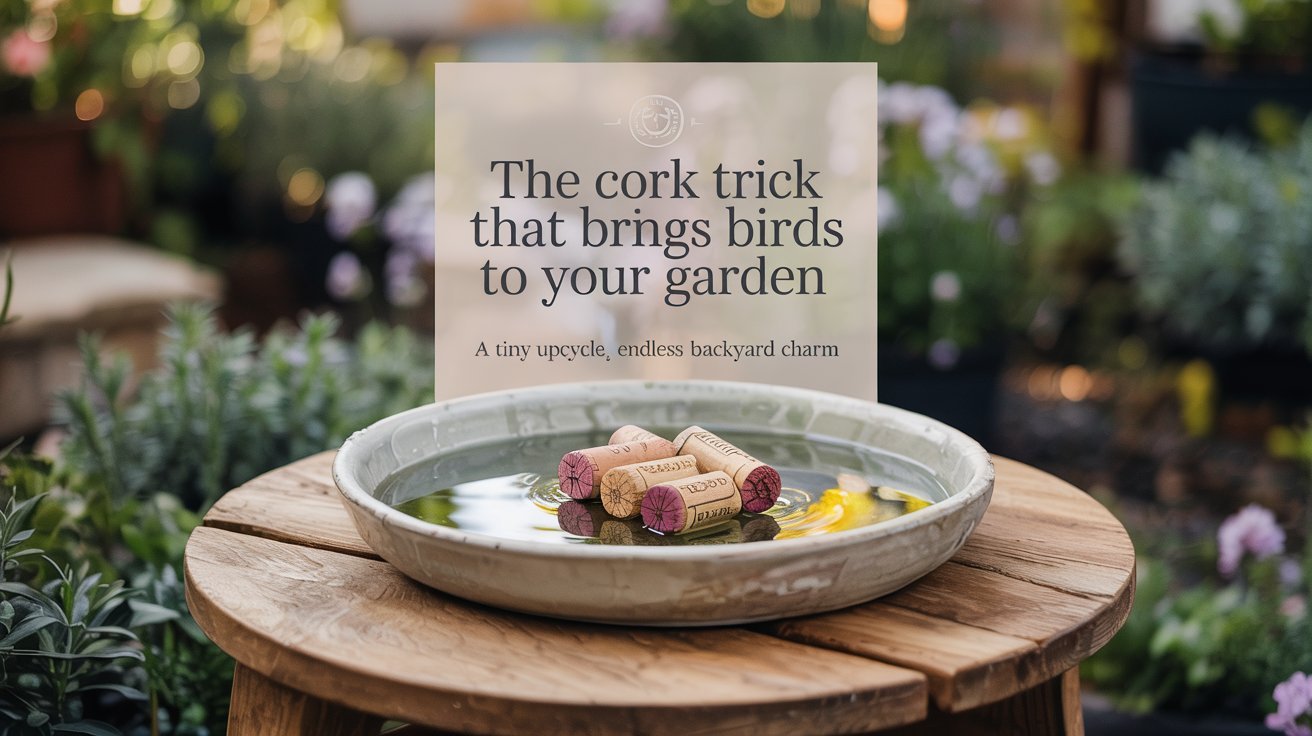
Hear the gentle clink of cork against glass and watch water ripple as curious birds hop onto your handmade floating raft. With just a handful of saved wine corks and a few minutes of your time, you can create a charming garden feature that gives your feathered friends a safe place to splash and play. This simple floating wine cork bird bath transforms everyday discards into something magical, proving that sometimes the coziest garden touches come from the simplest materials.
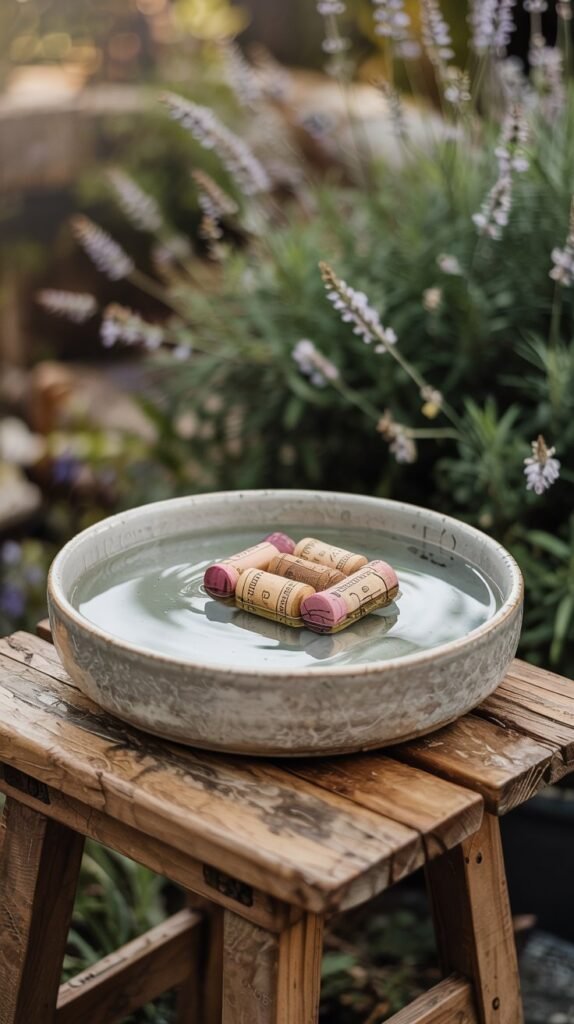
A simple floating wine cork raft provides birds with a safe perch while they bathe
What Is a Floating Wine Cork Bird Bath?
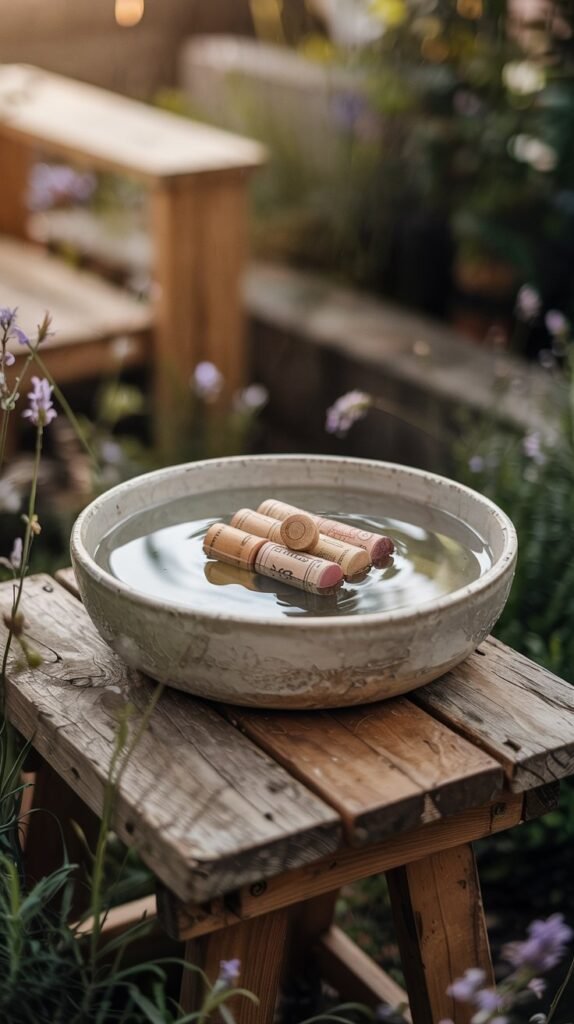
A floating wine cork bird bath is a clever upcycling project that combines sustainability with garden charm. At its heart, it’s a shallow bowl of water with a small raft made from recycled wine corks glued together. The natural buoyancy of cork creates a perfect floating perch where birds can land safely before splashing in the surrounding water.
Unlike traditional bird baths where birds must stand in water, this design gives them a dry spot to perch, making them feel more secure. The gentle movement of the floating raft also helps prevent water from freezing in winter and keeps mosquitoes from breeding in summer. It’s a win for everyone, you get to repurpose materials headed for the trash, and your garden birds get a cozy spot to bathe.
Project Specifications
- Difficulty: Easy – perfect for beginners
- Time Required: 15-20 minutes
- Cost: $5-$15 (or free with reused materials)
- Materials: Wine corks, shallow bowl, hot glue
What You’ll Need for Your Floating Cork Bird Bath
Wide, Shallow Bowl
Look for a bowl that’s no more than 2-3 inches deep. Birds prefer shallow water for safety. Glass, ceramic, or even a plant pot saucer works beautifully.
20-30 Wine Corks
Natural corks work best as they float reliably. Synthetic corks can work too, but test their buoyancy first. The more varied your collection, the more rustic and charming your raft will look.
Hot Glue Gun + Sticks
A standard craft hot glue gun works perfectly. Have extra glue sticks on hand — you’ll use more than you think to create strong bonds between the corks.
Decorative Rocks (Optional)
Small, smooth stones add visual interest around the base of your bird bath and help birds identify the water source from above.
Small Plants (Optional)
Low-growing plants around your bird bath create a natural setting that makes birds feel safe and protected while bathing.
Safety Gloves
Protect your fingers from hot glue burns with a pair of lightweight crafting gloves. Even experienced crafters can get the occasional glue drip on their skin.
Safety First!
Hot glue can cause serious burns. Always work on a protected surface, keep the glue gun pointed away from yourself, and consider wearing thin safety gloves. Keep children and pets away from your work area while the glue gun is hot.
Step-by-Step Instructions
Clean the Corks
Wipe each cork with a damp cloth to remove any wine residue, dust, or labels. Set them aside to dry completely before continuing. This ensures the glue will adhere properly and keeps your bird bath clean
Arrange a Test Layout
On a flat surface, arrange your corks in the pattern you want for your raft. Try different arrangements,side by side, end to end, or a combination. Make sure the overall shape will fit comfortably in your bowl with room for water around the edges. Take a photo of your final arrangement to reference while gluing.
Glue the Corks Together
Heat your glue gun and begin connecting the corks according to your test layout. Work in small sections, applying a generous bead of glue between each cork and pressing firmly for 10-15 seconds until the glue sets. Continue until all corks are connected.
Pro Tip: Apply generous amounts of glue between corks for a strong bond
Reinforce the Edges
Once your basic shape is complete, flip the raft over and add extra glue around all the seams on the underside. Pay special attention to the outer edges, as these will experience the most stress when floating. This reinforcement step is crucial for longevity.
Float and Finish
Place your completed cork raft in the shallow bowl and gently fill with water until the raft floats freely but the water doesn’t overflow. Add decorative rocks around the edge of the bowl if desired, and position any plants you want around the bath.
Helpful Tip
If you want your cork raft to stay centered in the bowl, try adding a small drop of museum putty or removable adhesive to the bottom center of the bowl before adding water. This creates a gentle anchor point that still allows the raft to move slightly with the water.
Practical Tips for Success
Natural corks (left) float better than synthetic ones (right)
Birds appreciate having a dry perch while they bathe
Dos
- Place your bird bath near low shrubs so birds have a safe place to perch before and after bathing
- Keep the water shallow, birds prefer water that’s no more than 1-2 inches deep
- Change the water every 2-3 days to keep it fresh and prevent mosquito breeding
- Clean the bowl and raft regularly with mild soap and rinse thoroughly
- Bring the bath indoors during freezing temperatures or severe weather
Don’ts
- Don’t use adhesives that aren’t labeled for craft or household use, they may break down in water
- Don’t leave the bath in full midday sun all summer; water will heat up and birds will avoid it
- Don’t use corks that are crumbling, moldy, or heavily stained
- Don’t expect the raft to last forever, plan to replace it every season or when the glue begins to fail
- Don’t place the bath where neighborhood cats can easily access it
How long will my cork raft last?
With proper care, your cork raft can last an entire season outdoors. However, constant exposure to water will eventually break down the glue bonds. Inspect your raft monthly and replace it when you notice the corks beginning to separate. You can extend its life by bringing it indoors during extreme weather.
Can I use synthetic corks for this project?
Yes, but test them first. Some synthetic corks float well, while others may sink. A mix of natural and synthetic corks can work, but make sure the majority are natural cork to ensure good buoyancy. Natural corks also have a more rustic, garden-friendly appearance.
Will birds actually use this type of bird bath?
Absolutely! Many birds actually prefer having a dry perch while they bathe. The floating raft gives them a secure spot to land before they splash in the surrounding water. Be patient, though, it may take birds a few days to discover and trust your new bath,
Creating a floating wine cork bird bath is more than just a clever way to reuse materials, it’s an invitation to bring more life and movement into your garden. There’s something deeply satisfying about watching birds discover and enjoy something you’ve made with your own hands, especially when it’s crafted from items that might otherwise be discarded.
Remember to place your bird bath where you can easily observe it from a window or garden seat. Change the water regularly, especially during hot weather, and take a moment each day to appreciate the simple joy of watching your feathered visitors splash and play. Sometimes the most meaningful garden features are the ones that connect us to the natural world in unexpected ways.
If you like this article, you’ll love 25 DIY Garden Ornaments Ideas to Add Charm to Your Backyard
