7 Smart Lighting and Layout Ideas for Better Home Hall Design

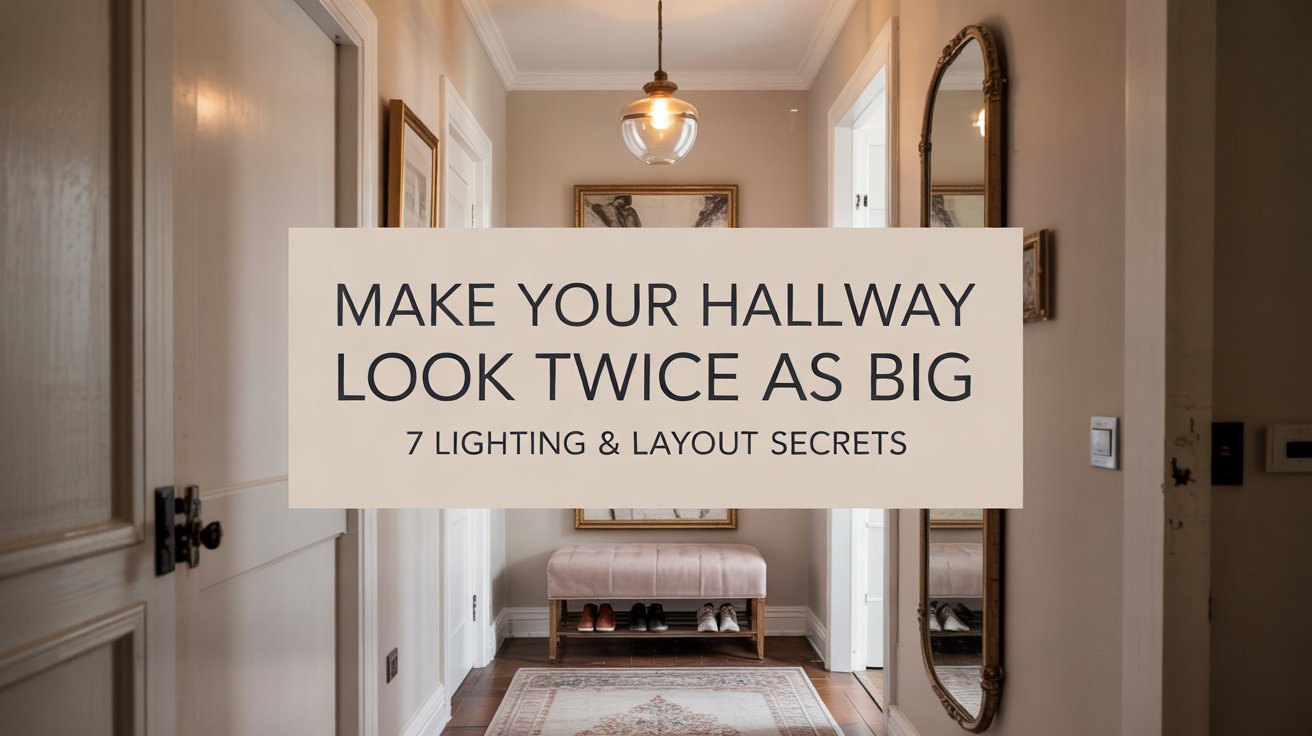
Your hallway is more than just a transitional space, it’s the first impression of your home’s interior and sets the tone for what lies beyond. Despite this, home hallway design is often overlooked in favor of more prominent rooms. A well-designed hall can transform your home’s flow, enhance its aesthetic appeal, and even make your entire space feel larger. In this guide, we’ll explore seven smart lighting and layout strategies that can elevate your home hall design from merely functional to truly exceptional.
1. Layer Your Lighting for Depth and Function
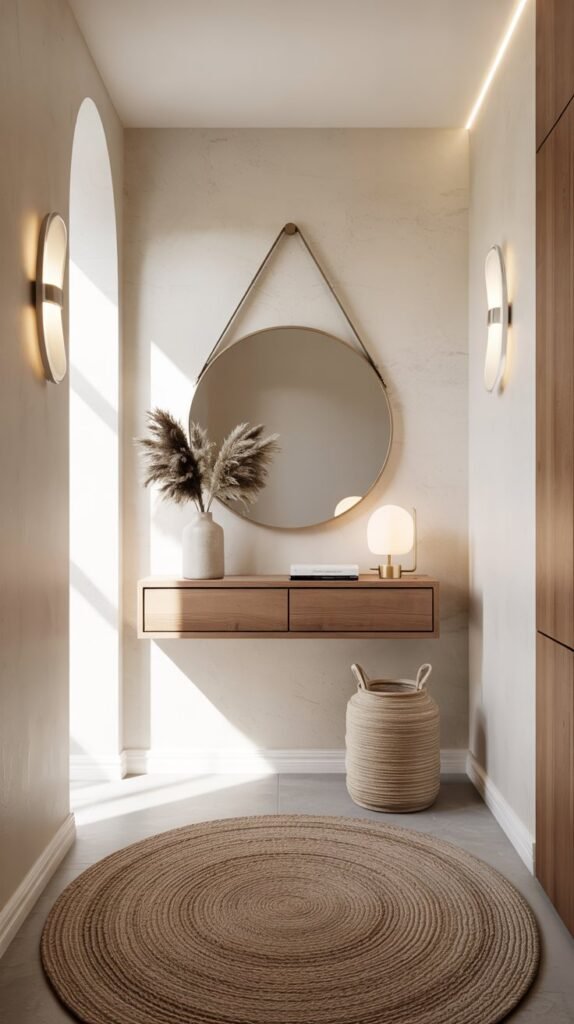
One of the most common mistakes in home hall design is relying on a single overhead light fixture. This creates harsh shadows and fails to highlight architectural features. Instead, implement a layered lighting approach that combines three essential types:
Ambient Lighting
This provides overall illumination and is your hallway’s foundation lighting. Consider flush-mount ceiling fixtures, recessed lighting, or a series of pendant lights spaced evenly throughout longer hallways.
Budget tip: Update existing fixtures with LED bulbs that offer warmer color temperatures (2700-3000K) for a more inviting glow.
Task Lighting
This focused lighting illuminates specific areas where activities occur, such as near console tables, coat hooks, or mirrors. Wall sconces at eye level (approximately 5’6″ from the floor) provide perfect task lighting without consuming valuable floor space.
Budget tip: Battery-operated or plug-in wall sconces offer an affordable alternative to hardwired fixtures.
Accent Lighting
This creates visual interest by highlighting artwork, architectural details, or textured walls. Consider adjustable picture lights, track lighting, or LED strip lights tucked into molding or baseboards.
Budget tip: Inexpensive LED strip lights can be installed under a floating shelf to create a sophisticated glow.
By combining these three lighting types, you create a hallway that feels larger, more inviting, and visually interesting. The key is to ensure each light source can be controlled independently, allowing you to adjust the mood according to time of day or specific needs.
2. Choose Space-Saving Furniture That Serves Multiple Purposes
In hallway design, every inch matters. The furniture you choose should maximize functionality without impeding traffic flow. Look for pieces that serve multiple purposes while maintaining a slim profile:
- Floating console tables with drawers provide surface space for keys and mail while offering hidden storage without a bulky footprint.
- Wall-mounted shelving with hooks underneath creates vertical storage that keeps floors clear while providing space for both decorative items and practical necessities.
- Narrow benches with built-in shoe storage offer seating for putting on shoes while concealing clutter.
- Fold-down desks or tables can transform a hallway into a temporary workspace when needed, then fold away to maintain clear passage.
When selecting furniture, measure your hallway’s width carefully and ensure at least 36 inches of clearance for comfortable passage (42 inches is ideal). For narrow hallways under 42 inches wide, consider furniture with a depth of no more than 12 inches to maintain proper flow.
Pro tip: The best hallway furniture disappears when not in use, either through clever folding mechanisms or by being so thoughtfully designed that it enhances rather than interrupts the space.
3. Strategic Mirror Placement to Amplify Light and Space
Mirrors are perhaps the most powerful tool in your hallway design arsenal, capable of doubling perceived space and multiplying available light. Their strategic placement can transform even the narrowest corridor:
Optimal Mirror Placement:
- Position mirrors opposite light sources (windows or light fixtures) to maximize reflection and brightness.
- Place a large mirror at the end of a hallway to create the illusion of extended space.
- Install a series of smaller mirrors along one wall to create rhythm and expand the perceived width.
- Consider mirrored furniture (like console tables with mirrored surfaces) for a subtle space-expanding effect.
Mirror Styles for Different Hallways:
- Traditional hallways: Ornate frames with gold or silver finishes
- Modern spaces: Frameless mirrors or minimal metal frames
- Narrow hallways: Full-length vertical mirrors to emphasize height
- Wide hallways: Horizontal mirrors or mirror groupings to balance proportions
For maximum impact, clean your mirrors regularly, dusty or smudged mirrors absorb rather than reflect light, defeating their purpose in your home hall design.
4. Use Color and Contrast to Define Zones and Direct Flow
Color is a powerful tool for shaping how we perceive and move through spaces. In hallway design, strategic use of color can visually expand tight areas, highlight architectural features, and subtly guide movement:
Color for Spatial Perception
Light colors (whites, soft grays, pale blues) on walls make hallways feel wider, while darker colors on the ceiling can make it feel lower and more intimate.
For narrow hallways, paint the end wall in a darker shade to create the illusion of depth and make the space feel longer.
Contrast for Definition
Use contrasting colors to define different zones within your hallway, perhaps a different tone where the hallway widens for a small seating area.
Consider using color to highlight architectural features like molding, arches, or niches that might otherwise go unnoticed.
Patterns for Direction
Striped wallpaper or runners can visually lengthen or widen a space depending on their orientation.
Floor patterns or changes in flooring material can subtly indicate transitions between spaces and guide movement through your home.
When selecting colors, consider the lighting conditions in your hallway. Spaces with limited natural light benefit from warmer tones that create a welcoming glow, while hallways with abundant sunlight can handle cooler colors without feeling stark.
Designer Tip: Test paint colors directly on your hallway walls rather than relying on swatches. Colors appear differently depending on your specific lighting conditions and can look dramatically different throughout the day.
5. Maximize Vertical Space with Wall-Mounted Solutions
Hallways often have limited floor space, making vertical surfaces your most valuable real estate. By thinking vertically, you can dramatically increase functionality without creating obstacles:
- Install floating shelves at staggered heights to create visual interest while providing display and storage space. Keep lower shelves narrower (6-8 inches) and higher shelves slightly deeper (8-10 inches) to maintain proper clearance.
- Mount hooks and pegs at various heights to accommodate both adults and children. Position adult hooks at approximately 5’6″ and children’s hooks at 3′-4′ from the floor.
- Consider wall-mounted lighting fixtures like sconces instead of floor or table lamps to preserve precious floor space while adding ambiance.
- Utilize the often-overlooked space above doorways for additional shelving or display areas for items used less frequently.
For rental properties where permanent installations might not be possible, consider tension rod systems or command hooks that can be removed without damage. Leaning ladders or ladder shelves can also provide vertical storage without requiring wall mounting.
6. Implement Floor-Level Lighting for Safety and Ambiance
Floor-level lighting serves the dual purpose of enhancing safety and creating a sophisticated ambiance in your hallway. This often-overlooked lighting strategy can transform your space:
Safety Benefits:
Illuminates potential trip hazards without harsh overhead glareProvides sufficient light for nighttime navigation without disturbing sleeping household membersCreates clear visual pathways through the homeHighlights steps or level changes that might otherwise be missed
Design Benefits:
Creates a theater-like atmosphere that adds sophisticationHighlights beautiful flooring materials and texturesAdds a layer of light that makes the space feel more three-dimensionalCan be used to subtly direct traffic flow through the home
Floor Lighting Options:
Recessed Baseboard Lighting
LED strips installed in specially designed baseboards or tucked behind existing ones create a floating effect and gentle wash of light across the floor.
Cost range: $30-$150 depending on length and quality
Step Lights
Small fixtures recessed into walls at ankle height provide focused pools of light. These can be installed with motion sensors for energy efficiency.
Cost range: $15-$75 per light plus installation
Under-Furniture Lighting
LED strips mounted beneath console tables, benches, or floating cabinets create a subtle glow that makes furniture appear to float.
Cost range: $20-$60 for DIY solutions
For maximum impact, connect floor lighting to dimmer switches or smart home systems that allow you to adjust brightness levels according to time of day or specific needs.
7. Harness and Amplify Natural Light
Natural light is the most flattering, energy-efficient, and mood-enhancing light source available. Even in hallways with limited or no windows, there are several strategies to capture and maximize daylight:
- Install interior windows or transoms between the hallway and adjacent rooms to borrow light from spaces with exterior windows.
- Consider replacing solid doors with partially glazed versions that allow light to filter through while maintaining privacy with frosted or textured glass.
- Explore tubular skylights or sun tubes that can channel daylight from the roof through even long distances, requiring minimal structural changes.
- Use reflective surfaces strategically to bounce available natural light deeper into the space, glossy paint finishes, metallic accents, and glass elements all help propagate light.
When natural light is truly limited, consider full-spectrum LED lighting that mimics daylight’s color temperature and quality. These bulbs (with a color temperature of 5000-6500K) can create the feeling of natural light even in windowless spaces.
Energy-Saving Tip: Pairing natural light strategies with motion-activated switches for supplemental lighting can reduce energy consumption by up to 30% in hallways, which are often lit unnecessarily when not in use.
Transform Your Hallway from Passageway to Showcase
Your hallway deserves the same thoughtful design consideration as any other room in your home. By implementing these seven lighting and layout strategies, you can transform what was once merely a transitional space into a functional, beautiful area that enhances your entire home experience.
Remember that hallway design is about balancing practicality with aesthetics, creating a space that facilitates movement while also making a style statement. Start with one or two of these ideas that resonate most with your specific needs, then build upon your success as you see the dramatic difference they make.
Whether you have a grand entrance hall or a modest corridor, these principles can be adapted to suit your space, style, and budget. The key is thoughtful implementation that considers how your hallway functions within your unique home and lifestyle.
Frequently Asked Questions About Home Hall Design
How wide should a hallway be for comfortable passage?
For optimal comfort and accessibility, hallways should ideally be at least 42 inches wide. The minimum acceptable width is 36 inches, which allows for basic passage but may feel tight with furniture. For homes where accessibility is a priority, consider 48 inches to allow for wheelchair turning and passing.
What’s the ideal height for hanging artwork in a hallway?
The center of artwork should typically be hung at eye level, approximately 57-60 inches from the floor. In hallways where people are primarily moving rather than standing still, you might consider hanging pieces slightly lower (54-57 inches) for better visibility while in motion.
How can I make a dark hallway with no windows feel brighter?
Combine several strategies: use light, reflective paint colors; install mirrors to bounce existing light; choose light fixtures with higher lumens and cooler color temperatures; consider tubular skylights if possible; use glass or translucent elements in doors to borrow light from adjacent rooms; and incorporate reflective decorative elements like metallic frames or glossy ceramics.
