10 Stylish Lemon Tree Potted Ideas to Transform Your Patio into a Citrus Paradise

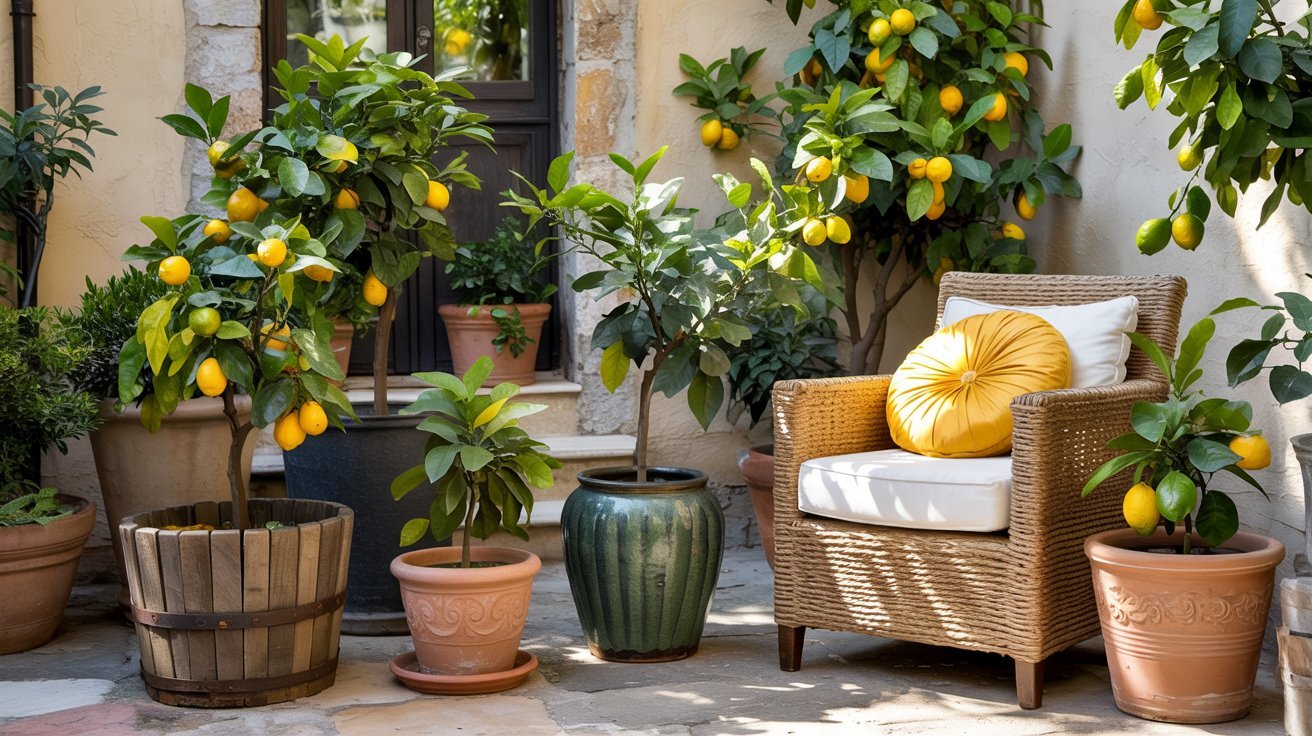
Growing lemon trees in containers opens up a world of gardening possibilities, even for those with limited outdoor space. The sweet fragrance of citrus blossoms, the glossy green foliage, and the promise of homegrown lemons can transform any patio, balcony, or small garden into a productive mini citrus paradise. Whether you’re a seasoned gardener or just starting out, these creative lemon tree potted ideas will inspire you to create your own thriving container citrus garden.
In This Post:
- Benefits of Growing Lemon Trees in Pots – Why container citrus makes sense even for gardeners who think they don’t have room
- Choosing the Right Lemon Variety – Meyer, Eureka, Ponderosa, Lisbon – which one actually suits pot life best
- Classic Terracotta Elegance – The centuries-old choice that still works better than most people realise
- Glazed Ceramic Statement Pots – Bold colors, Mediterranean vibes, and less watering than you’d expect
- Lightweight Modern Planters – The smart solution for balconies, rooftops, and anyone who needs to move things around
- Rustic Wooden Half Barrels – The country garden look that ages beautifully and gives roots serious room to grow
- Decorative Metal Containers – Industrial style meets citrus charm, with one heat warning you need to know
- Self-Watering Smart Planters – The high-tech option that keeps your tree happy even when you forget about it
- Nested Multi-Pot Arrangements – How to turn a few containers into something that looks like a whole citrus grove
- Decorative Urn-Style Planters – Classical elegance that frames entryways and makes your patio feel like Tuscany
- Vertical Tiered Planters – The space-saving solution for narrow balconies that gets creative in three dimensions
- Movable Planter with Built-in Trellis – Maximum fruit, minimum footprint, and the freedom to follow the sun
- Essential Care Tips for Potted Lemon Trees – Sunlight, watering, soil and fertiliser – everything your tree needs to actually thrive
Benefits of Growing Lemon Trees in Pots
Before diving into specific container ideas, let’s explore why growing lemon trees in pots makes perfect sense for many gardeners:
- Space flexibility – perfect for patios, balconies, and small gardens.
- Climate control – easily move your trees indoors during cold weather.
- Better drainage – prevent root rot with proper container selection.
- Pest management – reduce exposure to ground-dwelling pests.
- Decorative appeal – enhance your outdoor living space with beautiful citrus trees.
- Year-round fruit – enjoy fresh lemons regardless of your growing zone
Choosing the Right Lemon Variety for Container Growing
Not all lemon trees are created equal when it comes to container gardening. Dwarf varieties are your best bet as they naturally stay smaller while still producing full-sized fruit. Here are some excellent choices for pot cultivation:
Meyer Lemon
A hybrid of lemon and mandarin orange, Meyer lemons are sweeter and less acidic than standard lemons. They’re also more compact and cold-hardy, making them perfect for containers.
Eureka Lemon
This classic lemon variety adapts well to container life and can produce fruit year-round. Look for dwarf Eureka varieties for best results in pots.
Ponderosa Lemon
While producing larger fruits, dwarf Ponderosa varieties can thrive in containers and make a striking visual statement with their oversized lemons.
Lisbon Lemon
Known for their cold tolerance, Lisbon lemons adapt well to pot culture and produce abundantly with proper care.
1. Classic Terracotta Elegance
There’s a reason terracotta pots have been gardeners’ favorites for centuries, especially for citrus trees. These clay containers offer excellent breathability, allowing roots to stay healthy by preventing moisture buildup.
Container Recommendations:
- Size: 15-18 inch diameter minimum (larger as the tree grows)
- Material: Unglazed terracotta with drainage holes
- Style: Classic round or slightly tapered shape
Design Tips:
Group multiple terracotta pots of varying heights for visual interest. Add a matching terracotta saucer to protect patio surfaces. Consider Italian or Spanish-style terracotta for Mediterranean flair
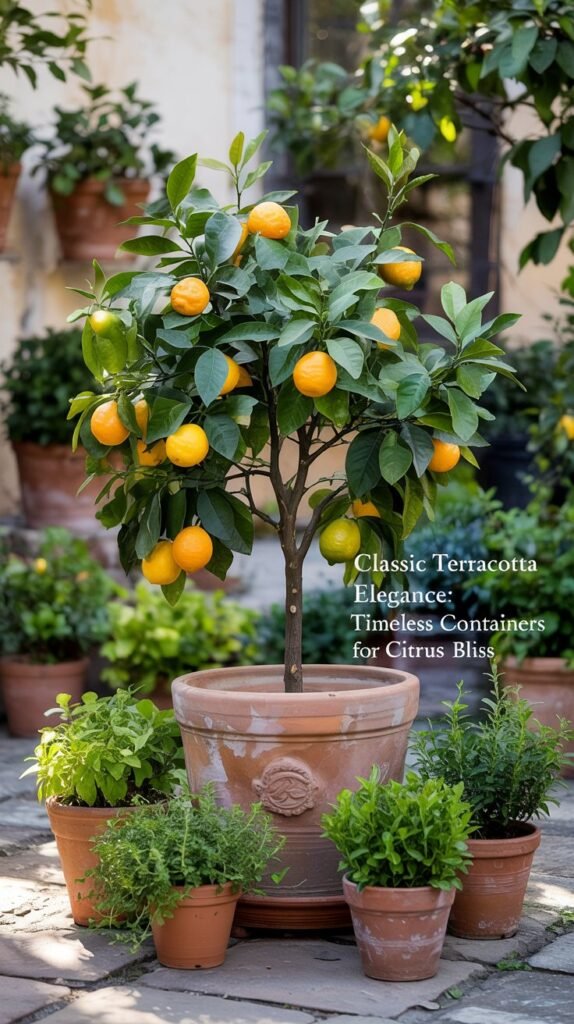
Terracotta’s natural color creates a beautiful contrast with the lemon tree’s green foliage and yellow fruits. For best results, choose a pot at least 15-18 inches in diameter with proper drainage holes. Remember that terracotta dries out faster than other materials, so you’ll need to monitor watering more closely, especially during hot summer months.
2. Glazed Ceramic Statement Pots
For those who want to make a bold design statement, glazed ceramic pots offer both functionality and eye-catching appeal. These containers retain moisture better than terracotta, requiring less frequent watering, which can be advantageous in hot, dry climates.
Container Recommendations:
- Size: 18-24 inch diameter for mature trees
- Material: Glazed ceramic with multiple drainage holes
- Colors: Cobalt blue, turquoise, or yellow for Mediterranean style
Design Tips:
- Choose colors that complement your outdoor décor.
- Select pots with wide bases for stability as trees grow.
- Consider frost-resistant glazed ceramics for colder climates
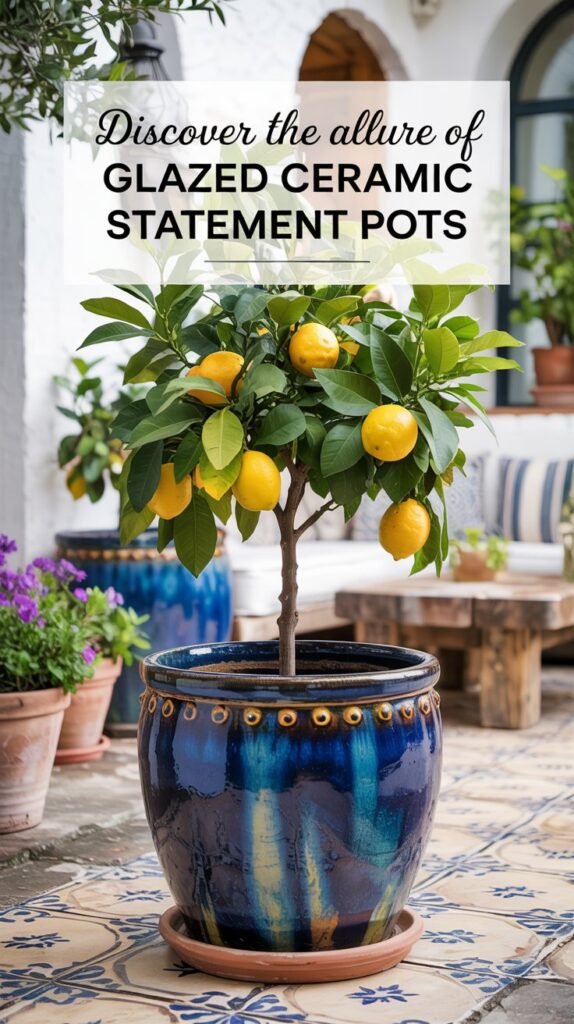
A vibrant blue glazed pot creates a stunning Mediterranean look that evokes the coastal regions where citrus thrives naturally. The glazed surface helps retain moisture, making these pots excellent choices for regions with hot, dry summers. Ensure any glazed pot has sufficient drainage holes to prevent root rot.
3. Lightweight Modern Planters
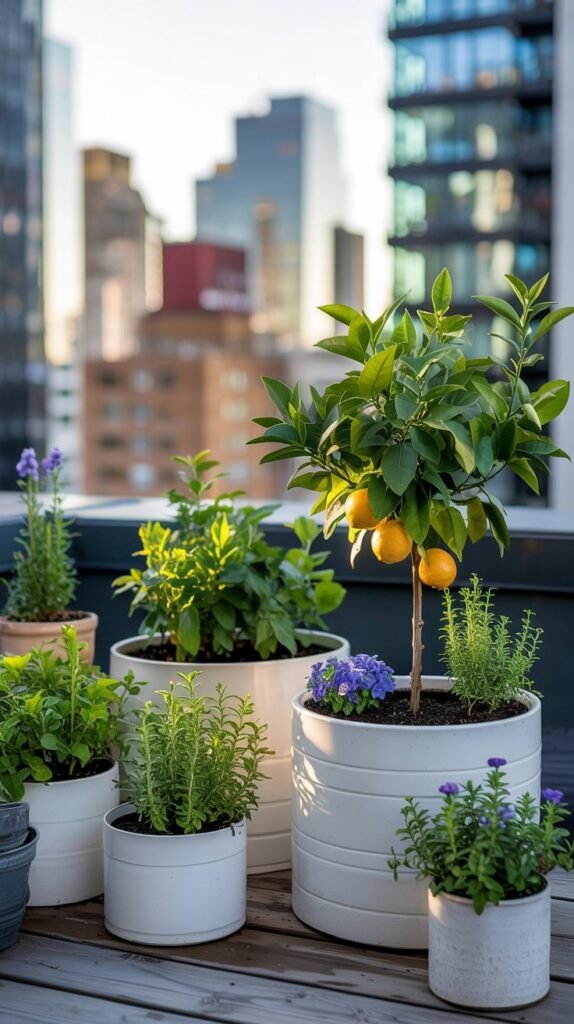
For gardeners who need mobility or have weight restrictions on balconies and rooftop gardens, lightweight modern planters offer an excellent solution. These contemporary containers combine style with practicality.
Container Recommendations:
- Size: 16-20 inch diameter with similar depth
- Material: Fiberglass, resin, or lightweight composite
- Style: Clean lines, minimalist design
Design Tips:
- Choose neutral colors like charcoal, white, or concrete-look
- Add casters to the bottom for easy mobility
- Group in threes with varying heights for visual impact
Terracotta’s natural color creates a beautiful contrast with the lemon tree’s green foliage and yellow fruits. For best results, choose a pot at least 15-18 inches in diameter with proper drainage holes. Remember that terracotta dries out faster than other materials, so you’ll need to monitor watering more closely, especially during hot summer months.
4. Rustic Wooden Half Barrels
For a charming country garden aesthetic, repurposed wooden half barrels make excellent lemon tree containers. These rustic planters offer ample room for root development and blend beautifully with natural garden settings.
Container Recommendations:
- Size: 18-24 inch diameter wine or whiskey barrels
- Material: Oak or cedar with metal banding
- Preparation: Add additional drainage holes before planting
Design Tips:
- Place on sturdy plant dollies for mobility.
- Line with landscape fabric to extend barrel life.
- Group with smaller wooden planters for a cohesive look
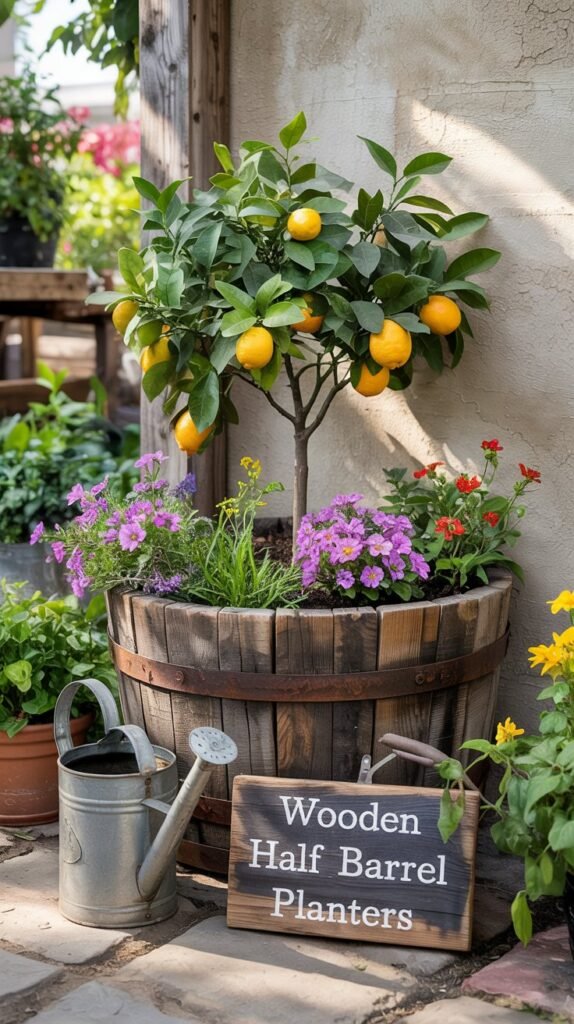
Wooden half barrels provide excellent insulation for root systems and have a naturally attractive appearance that ages beautifully. Their large size offers ample growing space, making them ideal for more mature lemon trees. To extend the life of wooden containers, consider treating them with a food-safe wood preservative and ensuring proper drainage.
5. Decorative Metal Containers
For a contemporary industrial look, metal containers offer durability and style. These sturdy planters can withstand the elements while adding a modern touch to your citrus garden.
Container Recommendations:
- Size: 18-22 inch diameter with similar depthMaterial:
- Galvanized steel, copper, or powder-coated metal
- Features: Raised base for airflow and drainage
Design Tips:
- Choose containers with drainage holes or drill your own
- Line with coconut coir to prevent soil contact with metal
- Consider metal planters with decorative cutouts or patterns
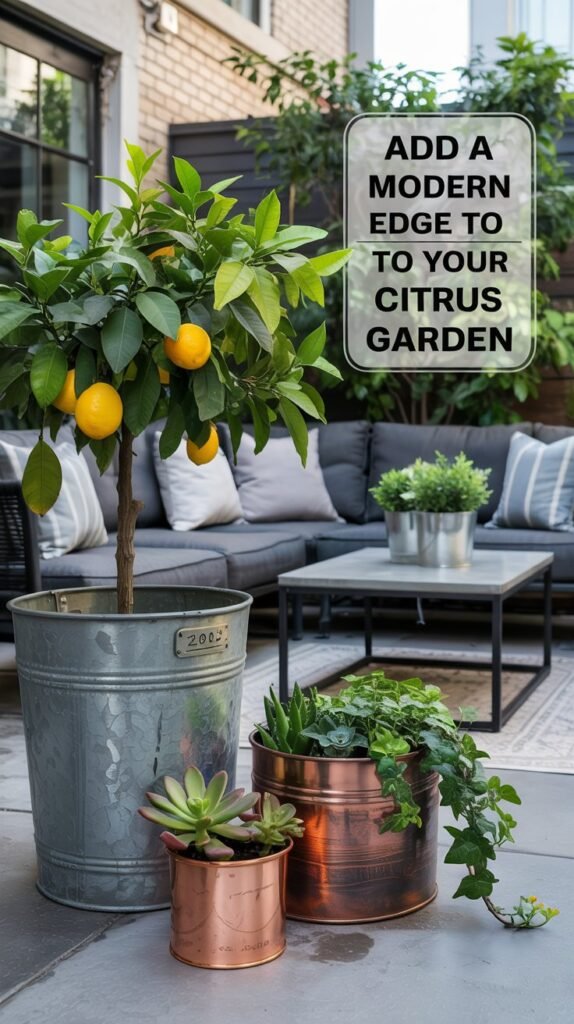
Metal containers can heat up quickly in direct sun, potentially stressing root systems. To combat this, place metal planters in locations that receive morning sun but afternoon shade, or use lighter-colored metals that reflect rather than absorb heat. The industrial aesthetic of metal containers creates an interesting contrast with the organic form of citrus trees.
6. Self-Watering Smart Planters
For busy gardeners or those who travel frequently, self-watering smart planters offer a high-tech solution to container citrus growing. These innovative pots help maintain consistent soil moisture, crucial for healthy lemon tree development.
Container Recommendations:
- Size: 16-20 inch diameter with water reservoir
- Material: UV-resistant plastic or composite materials
- Features: Built-in water level indicators and irrigation systems
Design Tips:
- Choose neutral colors that won’t compete with your tree
- Look for models with adjustable watering systems
- Consider smart planters with app connectivity for monitoring
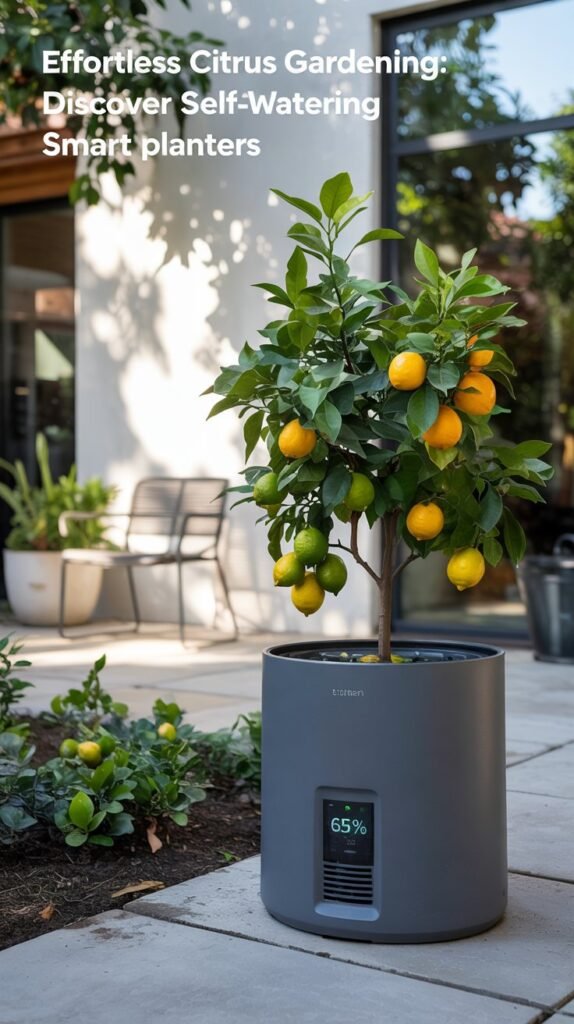
Self-watering planters feature a reservoir at the bottom that supplies water to the soil through capillary action or wicking systems. This helps prevent both overwatering and underwatering, common issues with container citrus. Some advanced models even connect to smartphone apps, allowing you to monitor soil moisture, light levels, and temperature remotely.
7. Nested Multi-Pot Arrangements
Create visual interest and maximize your citrus display by arranging multiple pots of varying sizes in a nested configuration. This approach allows you to showcase different lemon varieties or create a multi-level citrus garden in a compact space.
Container Recommendations:
- Sizes: Mix of 12″, 16″, and 20″ containers
- Materials: Consistent material but varying colors or finishes
- Arrangement: Largest pots at the back, smallest in front
Design Tips:
- Use plant stands or crates to create height variation
- Maintain a cohesive color palette across all containers
- Add smaller herb pots between larger citrus containers
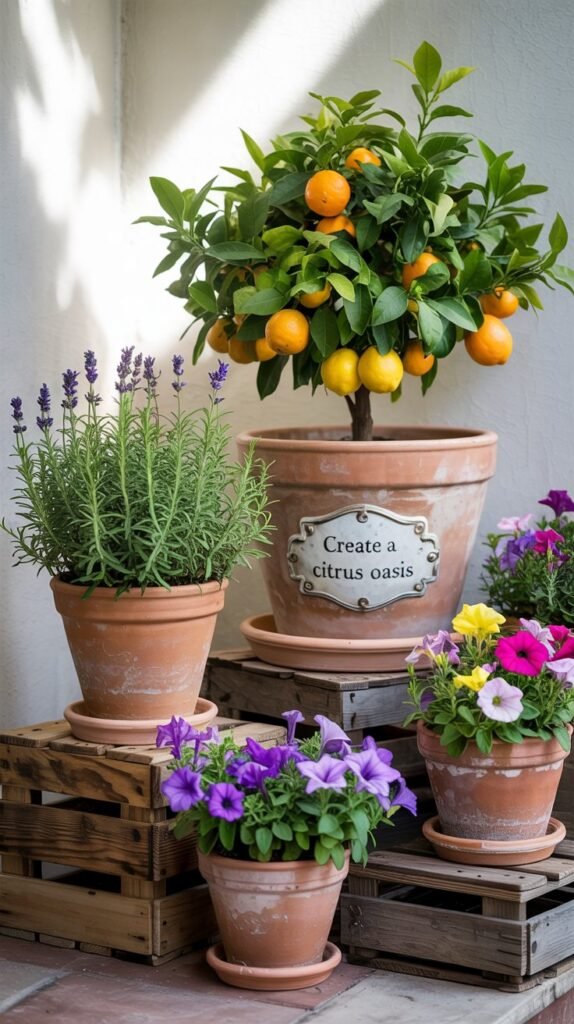
A nested arrangement creates the illusion of a lush citrus grove even in a limited space. This approach works particularly well for showcasing different varieties of citrus, such as combining Meyer lemons with kumquats or limes. The varied heights also create natural focal points and improve air circulation around each tree.
8. Decorative Urn-Style Planters
For a touch of classical elegance, urn-style planters make stunning homes for lemon trees. These decorative containers add architectural interest and a sense of permanence to your citrus garden.
Container Recommendations:
- Size: 18-24 inch diameter with wide mouth
- Material: Cast stone, fiberglass, or high-quality resin
- Style: Classical Greek or Italian-inspired designs
Design Tips:
- Place urns symmetrically to frame entryways or seating areas
- Choose weathered finishes for an established garden look
- Add matching pedestals to elevate smaller urn planters
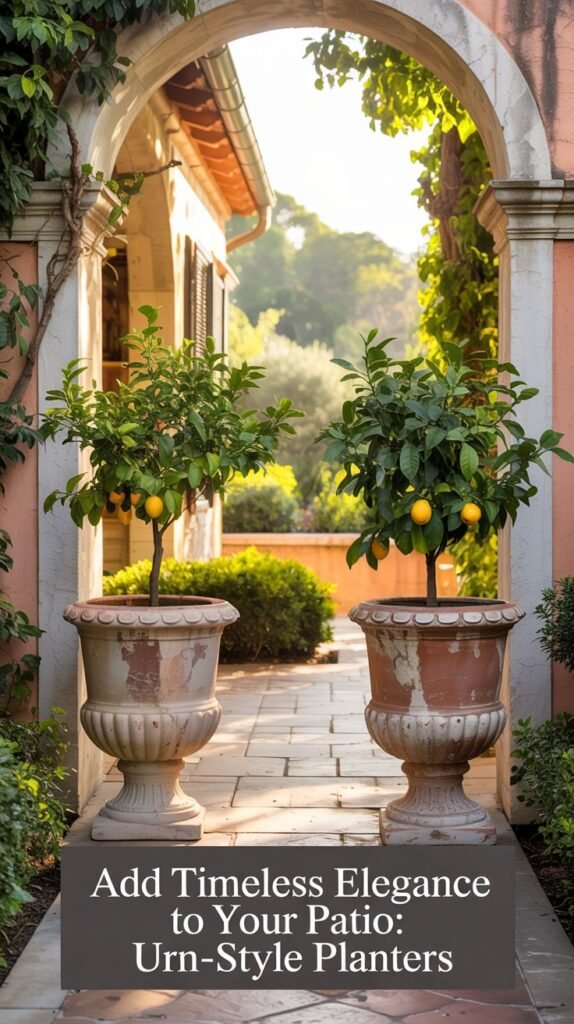
Urn-style planters create a formal, elegant atmosphere reminiscent of European orangeries and classic Mediterranean gardens. Their substantial appearance anchors garden designs and creates focal points. When selecting urn planters, ensure they have adequate drainage holes or drill your own before planting.
9. Vertical Tiered Planters
For extremely limited spaces like narrow balconies or small patios, vertical tiered planters offer an innovative solution. These space-saving containers allow you to grow multiple plants in a minimal footprint.
Container Recommendations:
- Size: Tiered system with 14-18 inch diameter sections
- Material: Durable plastic, fiberglass, or metal
- Features: Stackable design with individual growing compartments
Design Tips:
- Place dwarf lemon varieties in the top tier
- Plant complementary herbs or flowers in lower tiers
- Position against walls or railings to maximize space
Vertical tiered planters create a living wall effect, maximizing growing space in three dimensions. The top tier is perfect for a dwarf lemon tree, while lower tiers can accommodate companion plants that benefit citrus, such as beneficial herbs or flowers that attract pollinators. This arrangement not only saves space but also creates a visually striking garden feature.

10. Movable Planter with Built-in Trellis
For the ultimate in versatility, consider a movable planter with an integrated trellis system. This innovative container solution allows you to train your lemon tree for maximum fruit production while maintaining mobility.
Container Recommendations:
- Size: 18-24 inch diameter with attached trellis
- Material: Weather-resistant wood or composite with metal trellis
- Features: Heavy-duty casters and removable trellis panels
Design Tips:
Choose a square or rectangular base for stabilitySelect a trellis design that complements your outdoor décorConsider models with fold-down trellis for winter storage
A planter with built-in trellis support allows you to train your lemon tree in an espalier or fan pattern, maximizing fruit production in a compact footprint. The mobility feature means you can follow the sun throughout the seasons or easily move your tree indoors during cold weather. Some designs even include storage space in the base for gardening tools or supplies.

Essential Care Tips for Potted Lemon Trees
No matter which container style you choose, proper care is essential for thriving potted lemon trees. Here are the key considerations for maintaining healthy citrus in containers:
Sunlight & Location
- Position in full sun (6-8 hours daily)
- Protect from strong winds
- Move indoors when temperatures drop below 40°F (4°C)
Watering & Humidity
- Water when top 2 inches of soil feel dry
- Ensure excellent drainage
- Mist leaves regularly in dry climates
Soil & Fertilizer
- Use citrus-specific potting mix
- Fertilize with balanced citrus food every 4-6 weeks during growing season
- Maintain slightly acidic soil pH (5.5-6.5)

Transform Your Patio Into a Productive Citrus Garden
With these creative lemon tree pot ideas, you can transform even the smallest outdoor space into a thriving mini citrus garden. The key is selecting the right container, providing proper care, and arranging your potted trees in a way that maximizes both productivity and visual appeal. Whether you prefer classic terracotta, modern self-watering planters, or space-saving vertical solutions, there’s a perfect container option for your citrus growing adventure.
Remember that container-grown lemon trees require consistent care but reward you with year-round greenery, fragrant blossoms, and the incomparable taste of homegrown lemons. Start with one tree in a suitable pot, master the basics of container citrus care, and soon you’ll be expanding your collection to create a truly impressive patio citrus garden.
