Easy Macrame Projects, DIY Ideas to Start Today

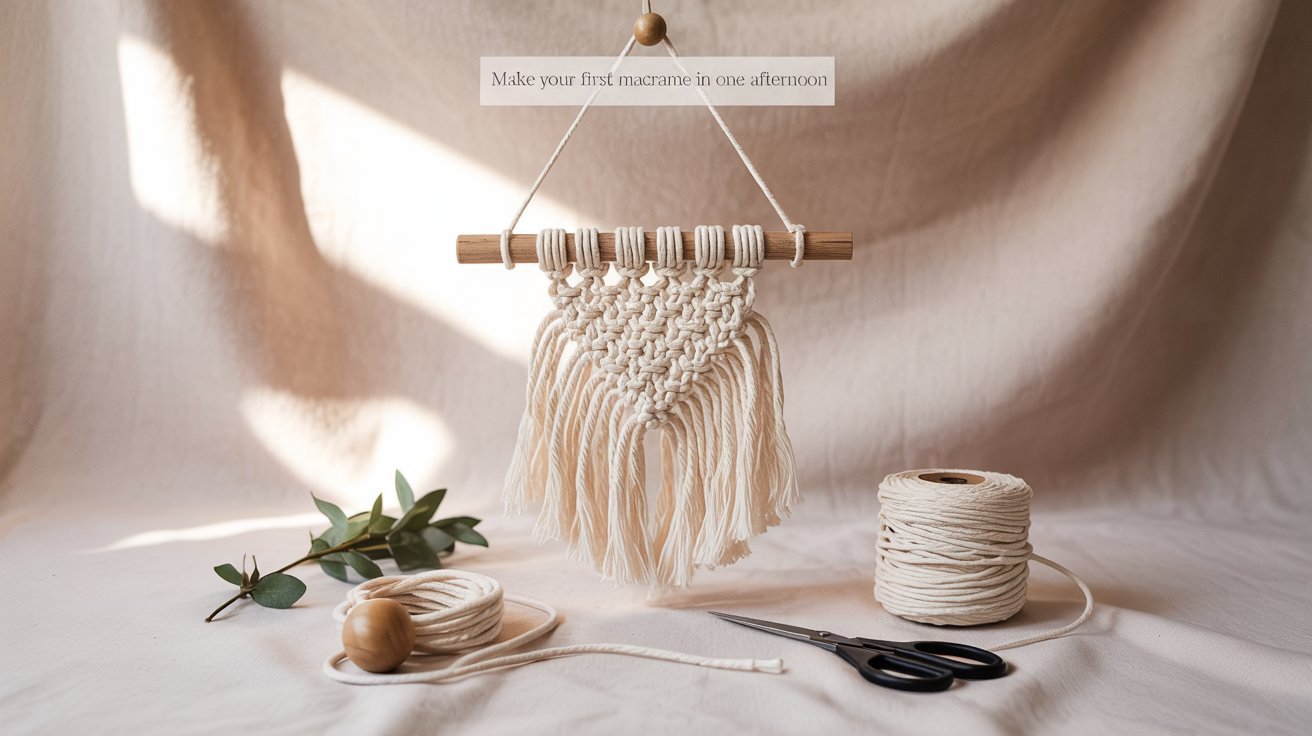
Have you been admiring those beautiful macrame wall hangings and plant holders, wondering if you could ever create something so intricate? I have wonderful news for you, macrame is much easier than it looks! With just a few basic knots and some simple supplies, you can create stunning handmade pieces in a single afternoon. In this guide, I’ll walk you through everything you need to know to start your macrame journey with confidence, from essential knots to your first completed project.
JUMP TO
- Macrame Supplies Beginners Actually Need
- Easy Macrame Knots Every Beginner Should Learn First
- Small Macrame Projects for Beginners
- Macrame Keychain
- Macrame Bracelet
- Mini Wall Hanging
- Macrame Coasters
- Easy Macrame Projects You Can Finish in One Day
- Simple Plant Hanger
- Table Runner
- Curtain Tiebacks
- Common Beginner Macrame Mistakes (and How to Avoid Them)
- How to Choose Your First Macrame Project
By the end of this article, you’ll have all the knowledge you need to choose your perfect first project and create something beautiful with your own hands. Let’s untangle the mystery of macrame together!
What Is Macrame?
Macrame is an ancient craft that involves knotting cord or rope to create decorative patterns and designs. Dating back thousands of years, this art form has experienced a major revival in recent years, becoming a favorite among home decorators and DIY enthusiasts.
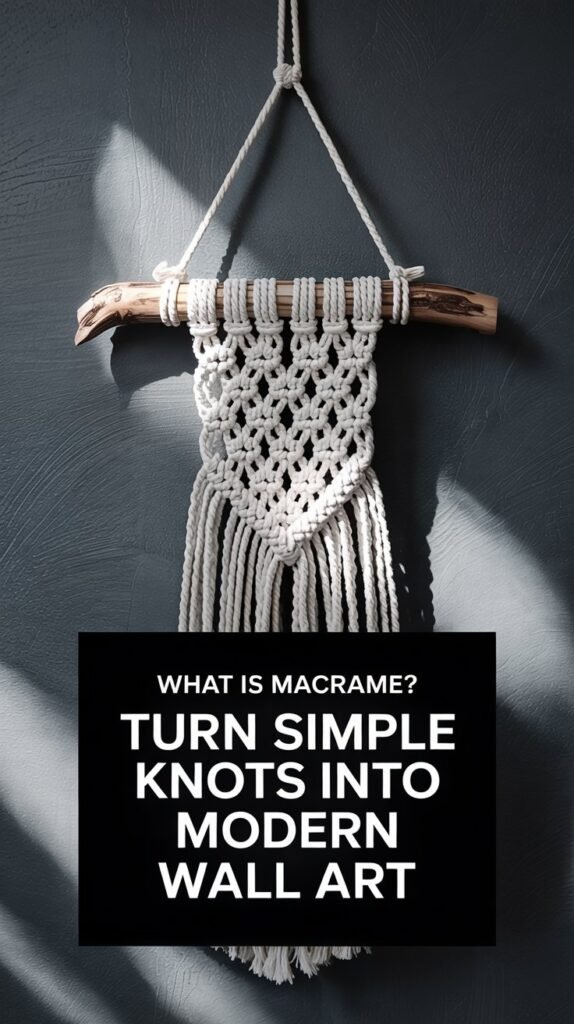
What makes macrame so perfect for beginners is its forgiving nature. Unlike many crafts that require specialized tools or technical skills, macrame only requires your hands, some cord, and knowledge of a few basic knots. If you make a mistake, simply untie the knot and try again, no materials wasted!
The repetitive nature of knotting creates a relaxing, almost meditative experience. Many beginners find that once they get into the rhythm of tying knots, the process becomes incredibly soothing. Plus, the transformation from simple cord to beautiful design happens quickly enough to keep you motivated.
Beginners typically start with small projects like keychains, wall hangings, or plant hangers. These projects allow you to practice basic techniques while creating something useful and beautiful for your home or as a thoughtful handmade gift.
Macrame Supplies Beginners Actually Need
One of the best things about starting macrame is that you don’t need a lot of expensive supplies. Let’s focus on the essentials that will get you creating beautiful pieces right away, without unnecessary spending.
Best Cord for Beginners
The most important supply for any macrame project is the cord itself. For beginners, I strongly recommend starting with cotton cord for several reasons: Cotton is soft and easy to work with, making knots simpler to tie and untie. It holds knots well without slipping. It’s available in various thicknesses and colors. It’s affordable, allowing you to practice without worry
For your first projects, 5mm to 6mm thickness is ideal. This size is thick enough to see your knots clearly and work with easily, but not so bulky that it becomes difficult to manage. As you gain experience, you can experiment with different thicknesses and materials.
Essential Tools (Keep It Minimal)
You’ll be happy to know that macrame requires very few tools to get started. Here’s all you really need:
- Sharp scissors – For cutting cord cleanly
- Measuring tape – For measuring cord lengths
- Hanging rod/dowel/stick – To hang your work while creating
- Optional: Comb – For fringe and detangling
- Optional: Masking tape – To prevent cord fraying
What Beginners Do NOT Need
- Specialty macrame boards or frames
- Expensive knotting tools
- High-end designer cords
- Complicated pattern books
The beauty of macrame is its simplicity, your hands are your primary tools! As you develop your skills and decide to tackle more complex projects, you can gradually add to your collection of supplies.
Easy Macrame Knots Every Beginner Should Learn First
The secret to macrame success is mastering a few fundamental knots. Don’t worry about learning dozens of complicated techniques, these four basic knots will allow you to create countless beautiful projects!
Lark’s Head Knot
The Lark’s Head Knot (also called Cow Hitch) is typically the first knot you’ll use in any project. It’s how you attach your cord to your working surface.
- Fold your cord in half to create a loop
- Place the loop behind your rod or dowel
- Bring the loop up and over the rod
- Pull the cord ends through the loop
- Pull tight to secure
Pro Tip: This knot is the foundation of most macrame projects, so practice until it becomes second nature.
Square Knot
The Square Knot is perhaps the most versatile and commonly used knot in macrame. It creates a flat, sturdy pattern that forms the basis of many designs.
- Identify your four cords, two center cords (filler cords) and two outer working cords
- Take the left cord and place it over the center cords and under the right cord
- Take the right cord, go under the center cords, and up through the loop created by the left cord
- Pull tight
- Repeat in the opposite direction (right cord over center, left cord under and through)
Pro Tip: Square knots can be repeated to create bands, or alternated to create patterns.
Half Hitch Knot
The Half Hitch is a simple knot that creates diagonal lines and curves in your work.
- Identify your filler cord (horizontal) and working cord
- Take your working cord and loop it over and behind the filler cord
- Bring the working cord through the loop you created
- Pull tight to secure
Pro Tip: Half hitches are often repeated to create texture and pattern in your designs.
Double Half Hitch Knot
The Double Half Hitch builds on the Half Hitch by simply repeating it. This creates a stronger, more defined line in your work.
- Create a Half Hitch Knot as described above
- Make a second Half Hitch directly below the first one
- Pull tight to secure
Pro Tip: Double Half Hitches are often used in sequence to create diagonal or curved lines in wall hangings and plant hangers.
Pro Tip
I recommend practicing these knots on a small piece of cord attached to a dowel before starting your first project. Once you feel comfortable with these four knots, you’ll be amazed at how many different projects you can create!
Small Macrame Projects for Beginners
Starting with small, quick projects is the perfect way to build confidence in your macrame skills. These mini projects can be completed in under 90 minutes, giving you that satisfying sense of accomplishment right away!
Macrame Keychain
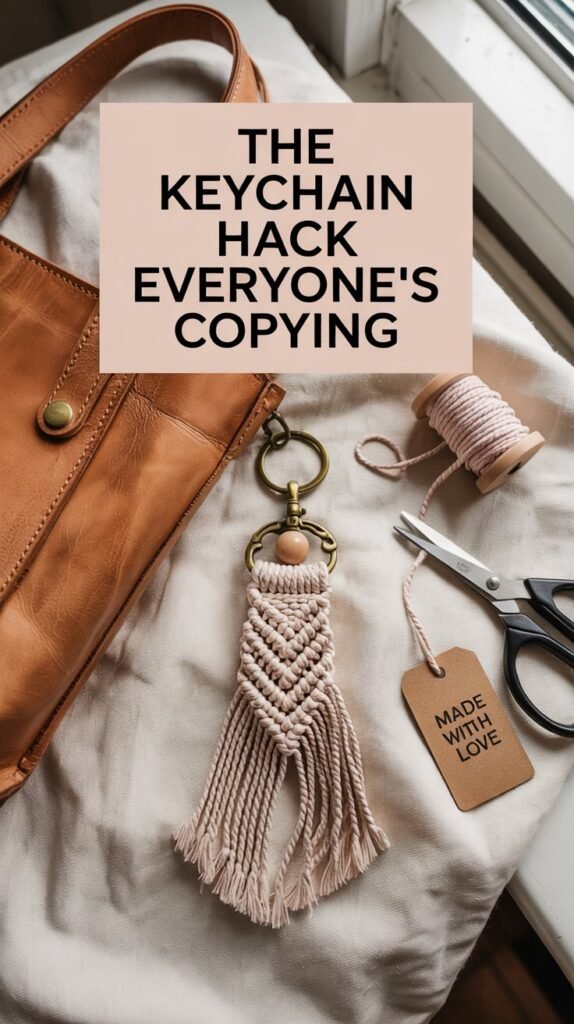
A keychain is the perfect first macrame project. It’s small, practical, and only requires a few basic knots.
- Time needed: 30-45 minutes
- Knots used: Lark’s Head, Square Knot
- Materials: 3mm cord, keyring, optional beads
- Difficulty: Very easy
Keychains are also perfect for experimenting with different cord colors and adding decorative elements like wooden beads.
Detailed guide how to make a Macrame Keychain
Macrame Bracelet
Macrame bracelets are not only fun to make but also make wonderful personalized gifts.
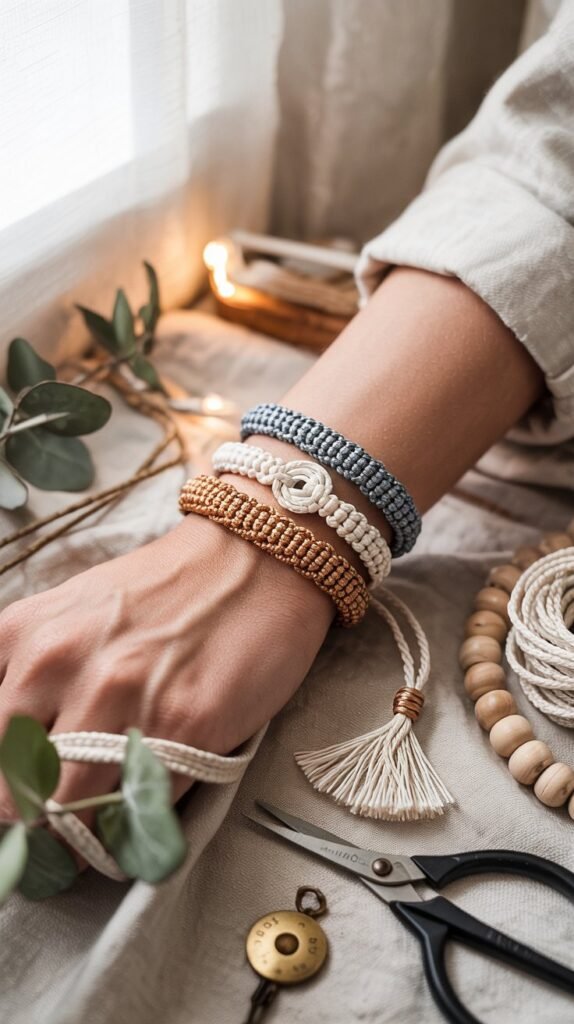
- Time needed: 45-60 minutes
- Knots used: Square Knot, Half Hitch
- Materials: 2-3mm cord, clasp or button
- Difficulty: Easy
Try making bracelets in different colors to match your outfits, or create a set to give as gifts to friends.
Detailed guide how to make a Macrame Bracelet
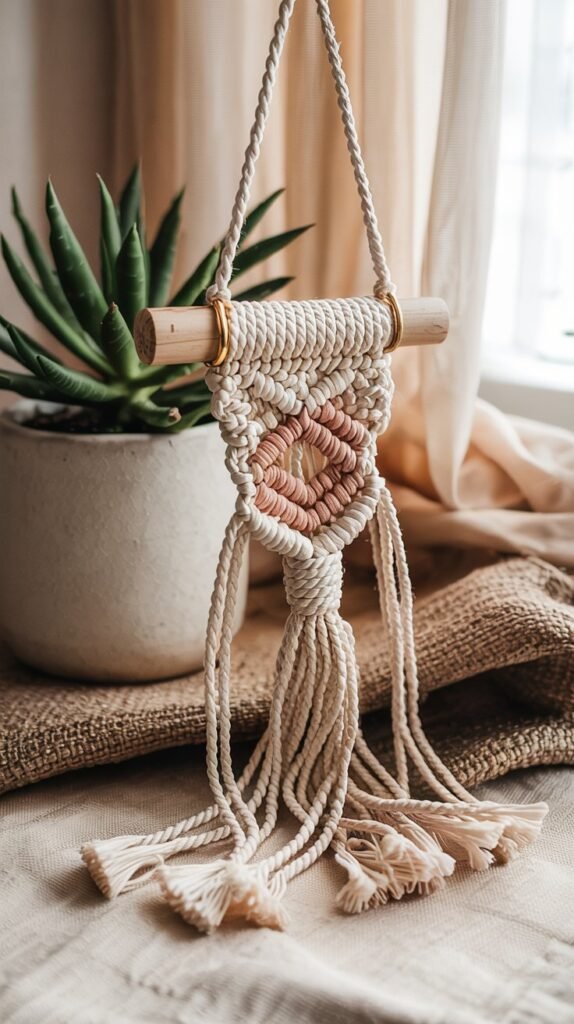
Mini Wall Hanging
A mini wall hanging gives you the satisfaction of creating wall art without the time commitment of a larger piece.
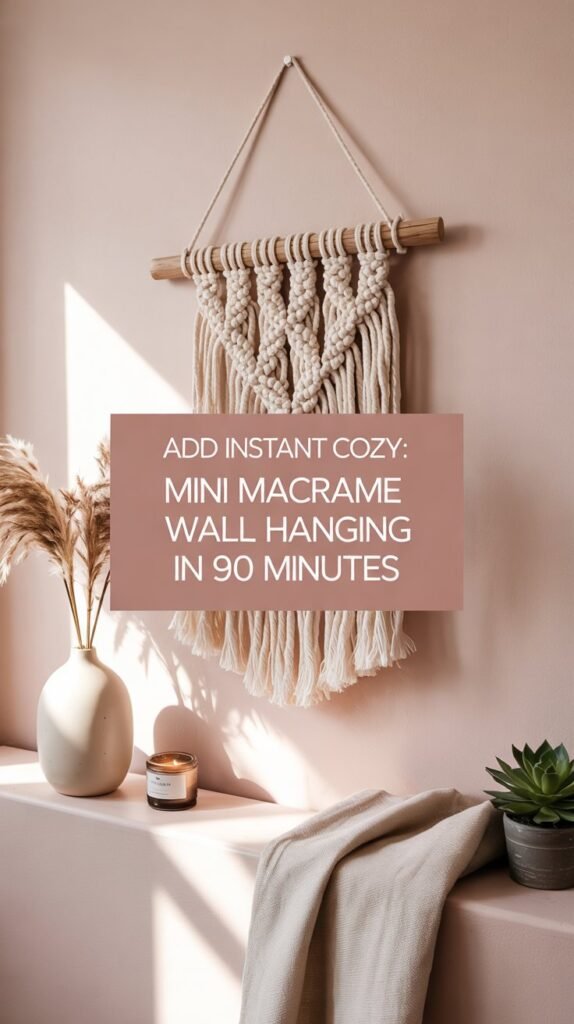
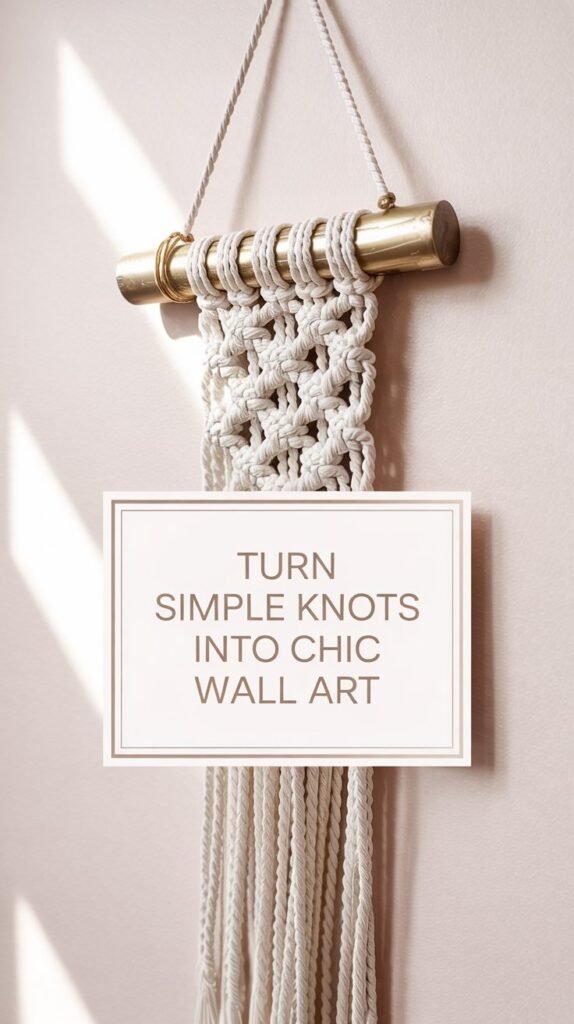
- Time needed: 60-90 minutes
- Knots used: Lark’s Head, Square Knot, Double Half Hitch
- Materials: 3-4mm cord, small wooden dowel
- Difficulty: Easy to moderate
These petite hangings are perfect for decorating small wall spaces, cubicles, or even as decorations on a gift.
Detailed guide how to make a Mini Wall Hanging
Macrame Coasters
Functional and decorative, macrame coasters are practical projects that help you practice consistent knotting.
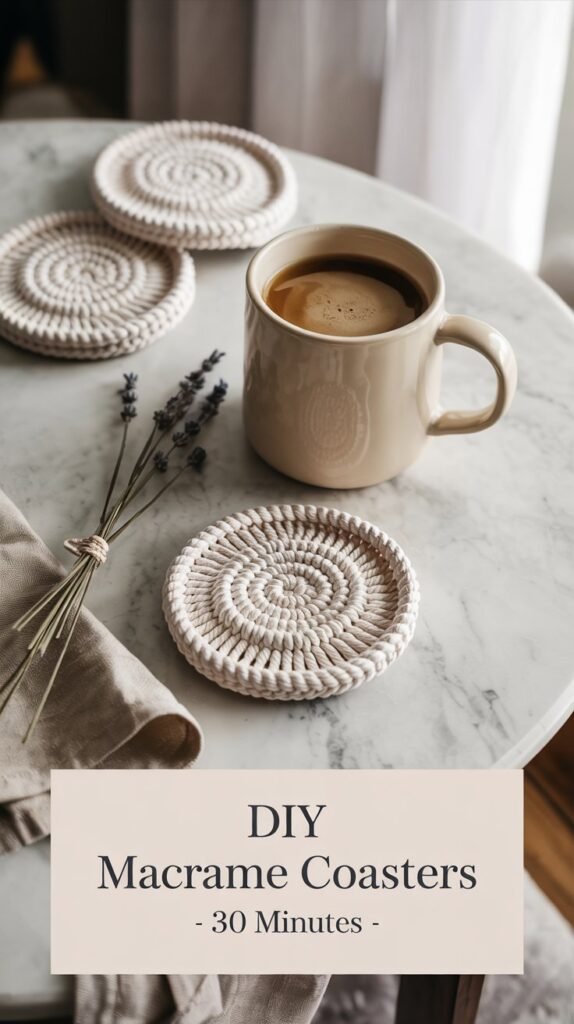
- Time needed: 30-60 minutes each
- Knots used: Square Knot, Spiral Knot
- Materials: 3-4mm cord
- Difficulty: Easy
Make a set of four or six coasters in coordinating colors for your home or as a housewarming gift.
Detailed guide how to make a Macrame Coasters
Easy Macrame Projects You Can Finish in One Day
Once you’ve mastered a few small projects, you might be ready to tackle something a bit more substantial. These projects can all be completed in a single day (2-4 hours) and will give you beautiful, functional pieces for your home.
Simple Plant Hanger
Plant hangers are among the most popular macrame projects, and a simple design is perfect for beginners.
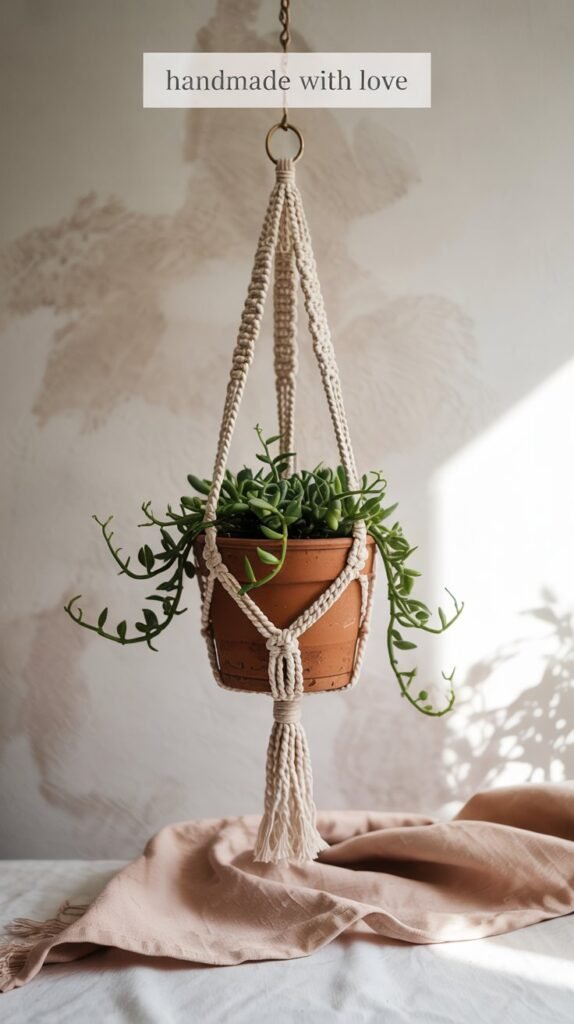
- Time needed: 2-3 hours
- Knots used: Lark’s Head, Square Knot, Gathering Knot
- Materials: 4-5mm cord, metal ring
- Difficulty: Easy to moderate
A basic plant hanger uses just a few types of knots repeated in a pattern, making it accessible even if you’re new to macrame. Detailed guide how to make a Simple Plant Hanger
Table Runner
A simple macrame table runner adds texture and warmth to your dining table or sideboard.
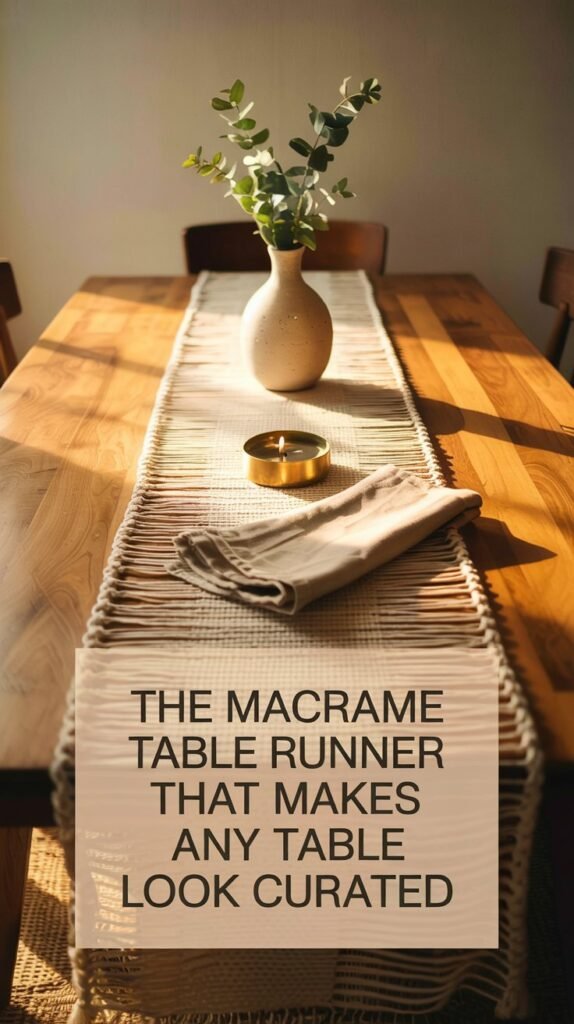
- Time needed: 3-4 hours
- Knots used: Lark’s Head, Square Knot, Double Half Hitch
- Materials: 3-4mm cord, wooden dowel (for working)
- Difficulty: Moderate
Table runners can be as simple or complex as you like, and can be customized to match your home decor.
Detailed guide how to make a Macrame Table Runner
Curtain Tiebacks
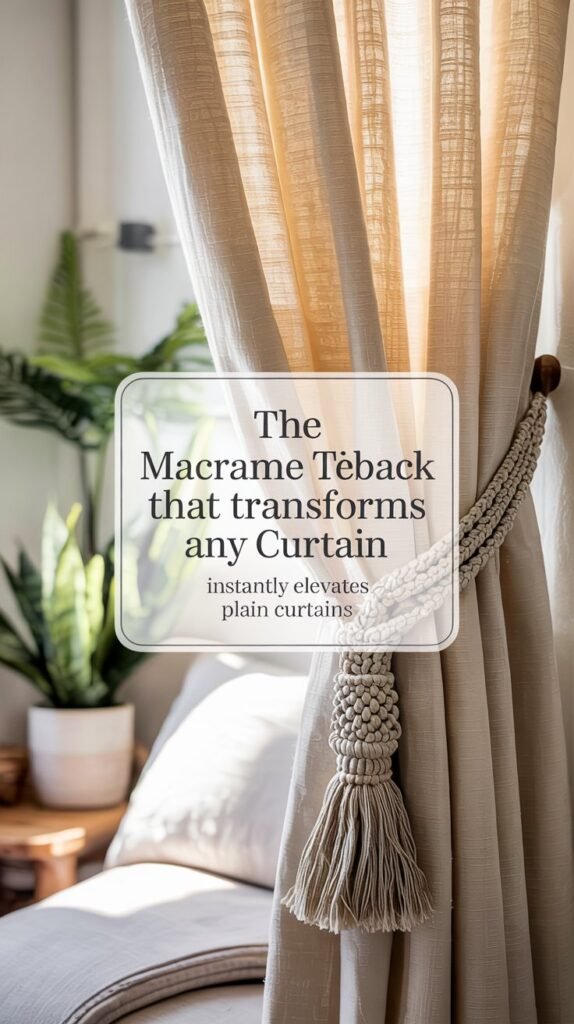
Curtain tiebacks are both decorative and functional, and making a pair gives you matching decor elements.
- Time needed: 1-2 hours for a pair
- Knots used: Lark’s Head, Square Knot, Spiral Knot
- Materials: 4-5mm cord, optional wooden beads
- Difficulty: Easy
These make a lovely addition to any room and are perfect for practicing consistent knotting to create matching pieces.
Detailed guide how to make a Curtain Tiebacks
Tips for Choosing Your First Project
When selecting which project to start with, consider these factors:
- Time available: Be realistic about how much time you can dedicate
- Complexity: Start with projects using only 1-2 types of knots
- Purpose: Choose something you’ll actually use or display
- Cord amount: Smaller projects require less cord, reducing waste if you make mistakes
Remember, it’s better to complete a simple project successfully than to get frustrated with a complex one and give up!
Beginner-Friendly Macrame Wall Decor
Wall hangings are among the most popular macrame projects, and for good reason, they make a stunning impact in your home decor. The good news is that you don’t need to create an elaborate design to achieve a beautiful result!
Minimal Wall Hanging Styles
Minimal designs focus on clean lines and simple patterns, making them perfect for beginners.
- Use basic square knots in straight rows
- Create simple geometric shapes like triangles or diamonds
- Keep fringe neat and even
- Work with a single color for a clean look
These designs complement modern and Scandinavian decor styles beautifully.
Boho-Style Beginner Wall Hangings
Bohemian-style macrame embraces a more relaxed, textured approach that’s very forgiving for beginners.
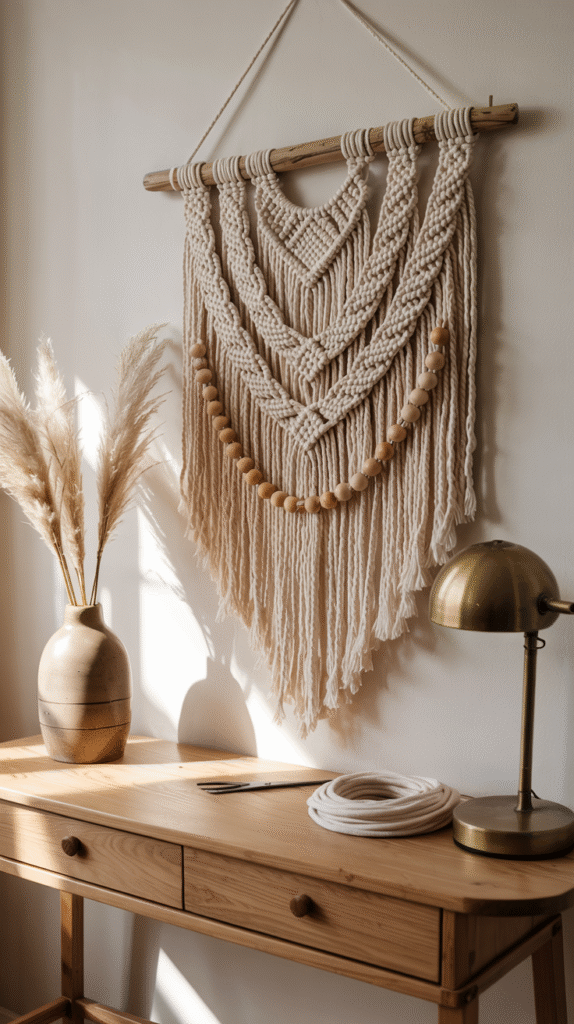
- Mix different knot types for varied texture
- Incorporate wooden beads or rings
- Create uneven, layered fringe
- Consider using dyed cord or mixing colors
These pieces add warmth and texture to any space and pair well with plants and natural elements.
Detailed guide how to make a Boho-Style Beginner Wall Hanging
Straight-Line Designs for Beginners macrame
Straight-line designs focus on vertical or horizontal lines, creating a structured look that’s easy to achieve.
- Use double half hitch knots to create clean lines
- Work in sections for easier management
- Add tassels or simple embellishments for interest
- Keep spacing consistent for a polished look
These designs work well in narrow spaces and create a striking visual impact.
Detailed guide how to make Straight-Line macrame
Size Recommendations for Your First Wall Piece
When creating your first wall hanging, size matters. I recommend:
- Width: 8-12 inches (20-30 cm)
- Length: 12-18 inches (30-45 cm), including fringe
- Dowel/rod length: 2-4 inches (5-10 cm) longer than your planned width
This size is manageable for beginners while still creating a piece with presence. As you gain confidence, you can scale up to larger pieces.
My first macrame wall hanging was only 10 inches wide, but it gave me the confidence to try larger pieces. Start small, but dream big!
Common Beginner Macrame Mistakes (and How to Avoid Them)
Everyone makes mistakes when learning a new craft, but knowing the common pitfalls can help you avoid frustration and enjoy the learning process more. Here are the most frequent beginner mistakes and how to prevent them:
Cutting Cord Too Short
This is perhaps the most common mistake beginners make, and it can be quite frustrating to run out of cord before your project is complete.
- The rule of thumb: Cut your cord 4 times the desired finished length
- For folded cords: Cut 8 times the desired finished length
- Always add: An extra 12 inches (30 cm) for safety
Remember that knots consume a surprising amount of cord length. When in doubt, cut longer than you think you need, you can always trim excess at the end.
Pulling Knots Too Tight
While it might seem logical to pull every knot as tight as possible, this can actually distort your work and make it difficult to maintain consistent tension.
- Aim for firm but not overly tight knots
- Maintain consistent tension throughout your project
- If your work starts to curl or warp, you’re likely pulling too tight
- Practice on scrap cord to find the right tension
Choosing Overly Complex Designs
Ambition is good, but starting with projects beyond your skill level can lead to frustration and disappointment.
- Master basic knots before attempting complex patterns
- Choose projects with 2-3 knot types maximum for your first attempts
- Look for patterns specifically labeled for beginners
- Build skills progressively with each project
Comparing Your Work to Advanced Artists
Social media is filled with stunning macrame creations by artists with years of experience. Comparing your first projects to these can be discouraging. Remember that everyone starts as a beginner
- Focus on your progress, not perfection
- Celebrate each completed project as a learning experience
- Save your early work to see how far you’ve come
Skipping Practice
Many beginners want to jump straight into creating a finished piece without practicing the basic knots first.
- Spend time practicing each knot on scrap cord
- Create a small sample board with different knots
- Practice maintaining consistent tension
- Learn how to undo and redo knots before starting a project
Pro Tip: Keep a “practice piece” of cord with a few knots tied on it. When you sit down to work on a project, warm up by tying a few knots on your practice piece first to get your hands and mind in sync.
How to Choose Your First Macrame Project
With so many beautiful macrame projects to choose from, it can be overwhelming to decide where to start. Ask yourself these three simple questions to find the perfect first project:
1. How Much Time Do I Have?
30-60 minutes: Keychain Bracelet, Simple coaster, Bag charm
1-2 hours: Mini wall hanging, Curtain tieback, Set of coasters
2-4 hours: Simple plant hanger, Small wall hanging, Table runner
4+ hours (split over days): Medium wall hanging, Complex plant hanger, Decorative garland
2. Where Will This Be Used?
Consider where you want to display or use your finished piece:
Wall decor: Wall hanging, small tapestry
Plant lover: Plant hanger, pot cover
Tabletop: Coasters, table runner, placemats
Personal use: Keychain, bracelet, bag
Gift: Keychain, ornament, small wall hanging
Choosing a project you’ll actually use or display increases motivation to complete it.
3. Do I Want Practice or Decor?
Be honest about your primary goal:
If you want practice:
- Choose smaller projects you can complete quickly
- Select designs that use 2-3 different knots
- Make multiples of the same item to perfect techniques
- Focus on consistency rather than complexity
If you want decor:
- Choose projects that match your home aesthetic
- Select cord colors that complement your decor
- Consider the space where the piece will live
- Start simple but with visual impact
PRO TIP: The best first project is one you’re excited to make, will actually finish, and will proudly display or use when it’s done.
Beginner Macrame Learning Resources
Everyone learns differently, so having access to various types of instructional resources can help you find the method that works best for you. Here are some effective ways to learn macrame:
Written Tutorials
Written tutorials are great for those who like to learn at their own pace and refer back to instructions as needed.
- Detailed step-by-step instructions
- Easy to reference while working
- Can be printed for offline use
- Often include helpful diagrams
Written tutorials are perfect for visual learners who prefer to see static images rather than videos.
Step-by-Step Photos
Photo tutorials break down each step visually, making it easier to understand complex movements.
- Clear visual representation of each step
- Easier to understand hand positioning
- Can be saved for reference
- Often shows close-up details
These are particularly helpful for understanding the exact positioning of cords during knotting.
Video Walkthroughs
Videos provide the most comprehensive learning experience, showing the entire process in real-time.
- See the exact hand movements and techniques
- Hear explanations while watching the demonstration
- Pause, rewind, and rewatch as needed
- Follow along at your own pace
Many beginners find videos the most helpful resource, especially for understanding the flow and rhythm of knotting.
Learning One Knot at a Time
Regardless of which learning method you prefer, I strongly recommend focusing on one knot at a time:
- Master the Lark’s Head Knot first
- Practice the Square Knot until it becomes second nature
- Move on to Half Hitch and Double Half Hitch
- Only then explore decorative knots like Spiral Knots or Berry Knots
This focused approach builds a solid foundation and prevents overwhelm. Once you’ve mastered these basic knots, you’ll be amazed at how quickly you can pick up more complex techniques.
Where to Go Next (Beginner Pathway)
Once you’ve completed your first macrame project, you might be wondering what to try next. Here’s a suggested pathway to develop your skills progressively:
Start with small projects
Begin with keychains, bracelets, and other small items to master basic knots without getting overwhelmed. Make several different small projects to build muscle memory and confidence.
Move to easy wall decor
Simple wall hangings with basic patterns are the perfect next step. They allow you to practice consistent knotting over a larger area while creating beautiful home decor.
Experiment with cord thickness
Try making similar projects with different cord thicknesses to understand how it affects the look and feel of your work. This will help you make better material choices for future projects.
Learn new knot patterns
Once you’re comfortable with the basics, start incorporating new knots and patterns into your projects. Add one new technique at a time to avoid frustration.
Macrame is a journey, not a race. Each project teaches you something new, and your skills will naturally evolve with practice.
Remember that everyone progresses at their own pace. Some people might spend months enjoying simple projects, while others quickly move on to more complex designs. There’s no right or wrong way to develop your skills, the most important thing is that you enjoy the process!
Recommended Learning Path
Small Macrame Projects: Perfect for beginners
Easy Macrame Projects: Next level challenges
Simple Macrame: Clean, modern designs
Macrame Knot Guide: Expand your technique library
Ready to Start Your Macrame Journey?
Macrame is a wonderfully accessible craft that allows you to create beautiful, handmade items with just some cord and your own two hands. Remember that perfection isn’t the goal, especially when you’re just starting out, the joy is in the creating!
Every knot you tie improves your skills, and every project you complete builds your confidence. Don’t be afraid to make mistakes, they’re simply opportunities to learn and grow as a fiber artist.
I encourage you to start today with one of the simple projects we’ve discussed. Choose something that excites you, gather your supplies, and enjoy the meditative process of knotting. Before you know it, you’ll have a beautiful handmade creation to display proudly or give as a thoughtful gift.
Frequently Asked Questions About Beginner Macrame
Is macrame hard to learn?
Macrame is actually one of the most accessible crafts for beginners! It requires no special tools beyond the cord itself, and most projects use just a few basic knots repeated in patterns. Unlike knitting or crochet, there’s no need to learn how to read complex patterns. If you can tie your shoes, you can learn macrame! The key is to start with simple projects and build your skills gradually.
How long does it take to learn macrame?
You can learn the basic macrame knots in just 30 minutes to an hour. Most beginners can complete their first simple project (like a keychain or bracelet) in a single sitting. Becoming proficient enough to create more complex designs typically takes a few weeks of regular practice. Like any craft, the more you practice, the more skilled you’ll become, but the learning curve for macrame is quite gentle compared to many other crafts.
What’s the best macrame cord for beginners?
For beginners, 3-ply cotton cord in the 4-6mm thickness range is ideal. This size is easy to handle, shows knots clearly, and is forgiving if you need to untie and retry knots. Natural cotton is soft on the hands and holds knots well without being slippery. As you gain experience, you can experiment with different materials and thicknesses, but cotton is the perfect starting point for learning the basics.
How much cord do I need for a beginner wall hanging?
For a small beginner wall hanging (approximately 10″ wide by 15″ long), you’ll need about 30-40 yards of cord. Remember the rule of thumb: your cord should be at least 4 times the desired finished length of your project, and if you’re folding the cord in half (as with Lark’s Head Knots), you’ll need 8 times the length. It’s always better to have too much cord than too little, as you can trim excess at the end but can’t add more if you run out!
Can I make macrame if I’m not “crafty”?
Absolutely! Macrame is one of the most accessible crafts for people who don’t consider themselves naturally “crafty.” The basic knots are simple to learn, and there’s no need for special skills like drawing or sewing. Macrame is very forgiving, if you make a mistake, you can simply untie the knot and try again. Many people who claim they’re “not crafty” are surprised by how quickly they pick up macrame and how satisfying it is to create something beautiful with their hands.
