No-Mow Lawn Alternatives for Busy Homeowners

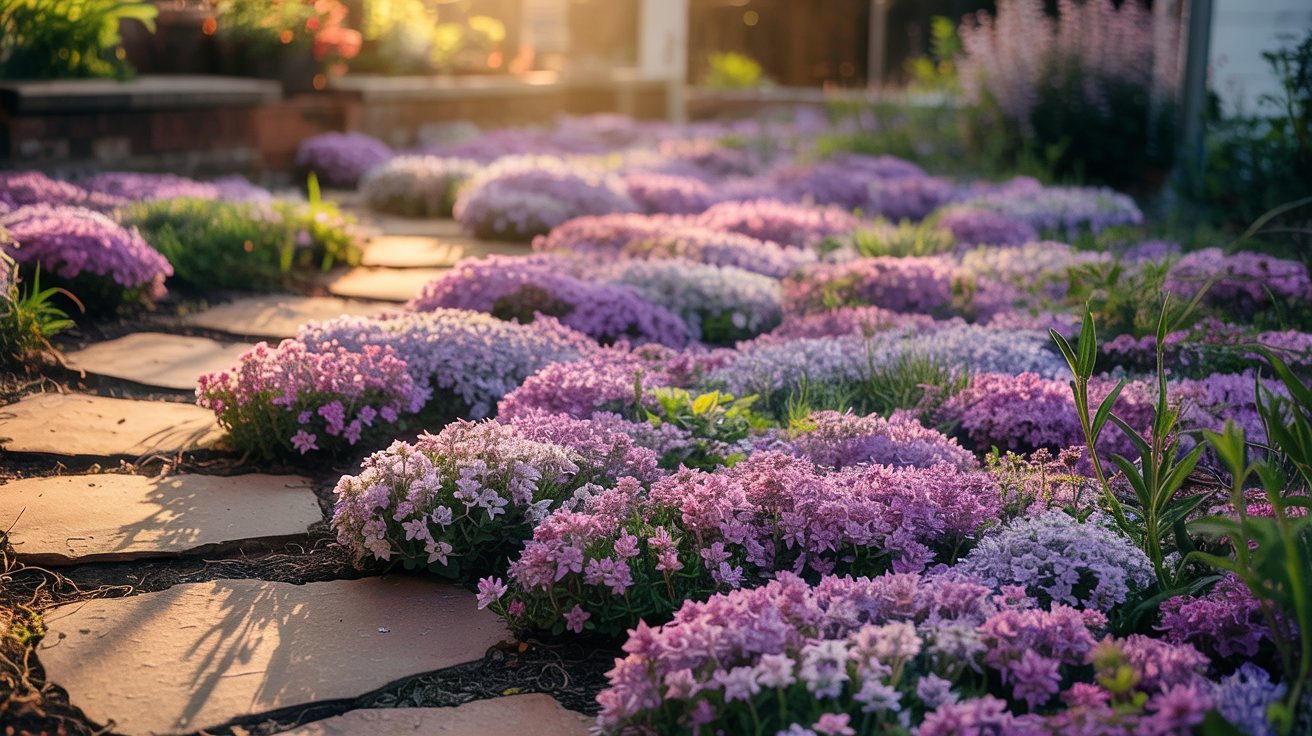
Are you tired of spending your precious weekends pushing a lawn mower? The average American homeowner spends nearly 70 hours per year maintaining their lawn, that’s almost three full days you could reclaim for activities you actually enjoy. Traditional turf lawns demand constant watering, mowing, fertilizing, and weeding, creating an endless cycle of maintenance. But what if there was a better way?
Today’s innovative no-mow lawn alternatives offer the lush, green appearance you love with a fraction of the upkeep. Whether you’re seeking an eco-friendly option, a solution for challenging growing conditions, or simply want to reclaim your weekends, this comprehensive guide will help you discover the perfect low-maintenance alternative for your unique situation.
Why Consider No-Mow Lawn Alternatives?
Time and Resource Savings
- Eliminate weekly mowing (average 25-30 hours annually)
- Reduce water usage by up to 50-80%
- Minimize or eliminate fertilizer and pesticide needs
- Lower maintenance equipment costs and fuel usage
Environmental Benefits
- Decrease water consumption in drought-prone areas
- Reduce air and noise pollution from gas-powered equipment
- Create habitat for beneficial insects and pollinators
- Improve soil health and reduce erosion
Did you know? According to the University of Missouri, approximately 54 million Americans mow their lawns each weekend, consuming over 800 million gallons of gas annually and producing significant air pollution.
Native Groundcovers: The Eco-Friendly No-Mow Solution
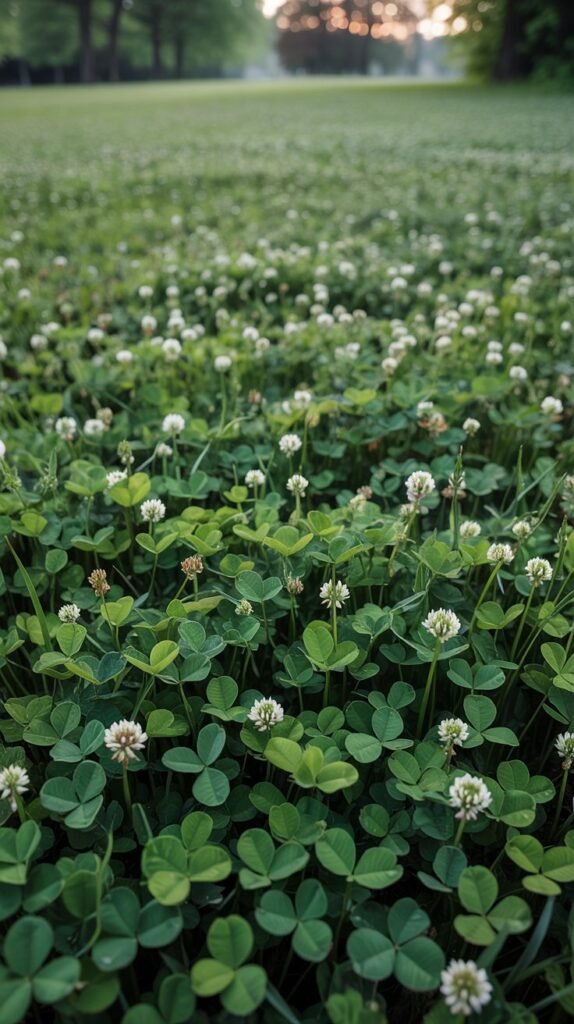
Native groundcovers offer a beautiful, eco-friendly alternative to traditional lawns. These plants have evolved to thrive in your local climate with minimal intervention, making them exceptionally low-maintenance while supporting local wildlife.
Popular Native Groundcover Options
Creeping Thyme
This aromatic groundcover creates a dense carpet of tiny leaves topped with purple, pink, or white flowers that attract pollinators. It handles light foot traffic and releases a pleasant scent when walked upon.
Height: 2-4 inches
Zones: 4-9
Sun: Full sun to partial shade
Clover (White Dutch or Microclover)
Once a standard component in lawn seed mixes, clover fixes nitrogen in the soil (self-fertilizing), stays green during drought, and requires minimal mowing, just 1-2 times yearly if desired.
Height: 2-8 inches
Zones: 3-10
Sun: Full sun to partial shade
Dwarf Cinquefoil
This native plant forms a low mat of strawberry-like leaves with cheerful yellow flowers in spring and summer. It handles moderate foot traffic and spreads to fill spaces quickly.
Height: 3-4 inches
Zones: 4-8
Sun: Full sun to partial shade
Advantages of Native Groundcovers
- Extremely low water requirements once established
- No mowing needed (occasional trimming for some varieties)
- Support for local pollinators and wildlife
- Excellent erosion control on slopes
- Seasonal interest with flowers and foliage changes
Limitations of Native Groundcovers
- Slower establishment period (1-2 years for full coverage)
- Limited foot traffic tolerance compared to turf
- May require occasional weeding during establishment
- Some varieties go dormant in extreme weather
- Not suitable for heavy-use play areas
Installation Basics for Native Groundcovers
- Remove existing grass using a sod cutter, sheet mulching, or careful herbicide application.
- Prepare the soil by removing debris and adding compost if needed.
- Plant groundcover using plugs (faster establishment) or seeds (more economical for large areas).
- Water thoroughly after planting and maintain consistent moisture for 4-6 weeks.
- Apply light mulch between plants to suppress weeds until groundcover fills in.
Time Investment: Expect to spend a full weekend preparing and planting a 500 sq. ft. area. Most groundcovers will take 1-2 growing seasons to fully establish, with some maintenance required during this period.
Moss Lawns: The Shade-Loving No-Mow Alternative
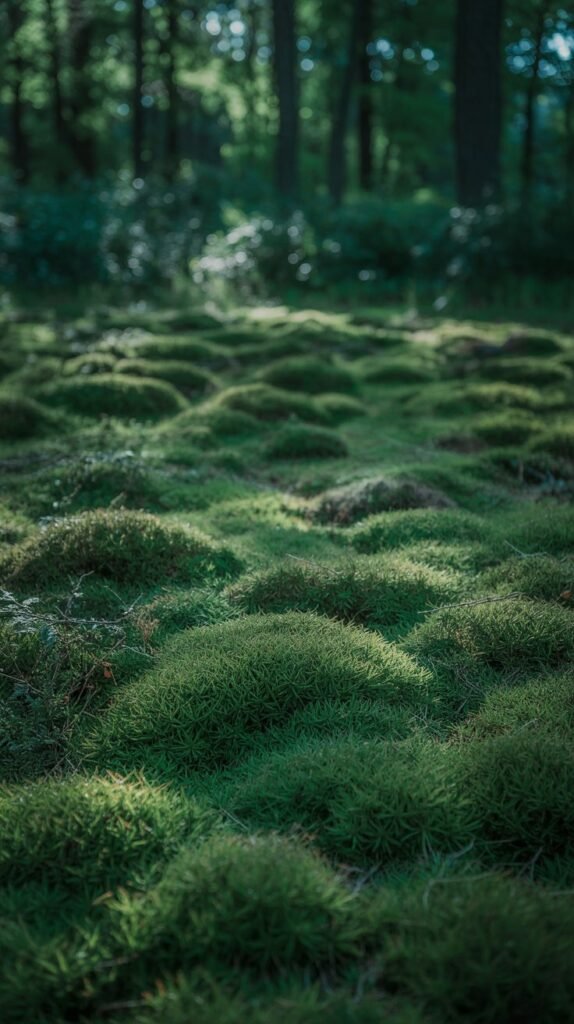
For shady areas where grass struggles, moss provides an enchanting carpet of green that never needs mowing, fertilizing, or significant watering once established. This velvety alternative creates a woodland-inspired landscape that’s both beautiful and practical.
Types of Moss for Lawn Replacement
Sheet Moss (Hypnum)
Forms a dense, carpet-like mat that’s ideal for areas with light foot traffic. Its flat growth habit creates a uniform appearance similar to a traditional lawn.
Height: 1-2 inches
Zones: 3-10
Light: Partial to full shade
Cushion Moss (Leucobryum)
Creates small, rounded mounds that form a textured carpet. This variety is exceptionally drought-tolerant once established and offers interesting texture.
Height: 2-4 inches
Zones: 4-10
Light: Partial to full shade
Fern Moss (Thuidium)
Features delicate, fern-like foliage that creates a lush, textured carpet. This variety spreads quickly and maintains good color throughout the seasons.
Height: 1-3 inches
Zones: 4-9
Light: Partial to full shade
Advantages of Moss Lawns
- Zero mowing required—ever
- Thrives in shade where grass struggles
- Stays green year-round in most climates
- Minimal watering once established
- No fertilizer or pesticides needed
- Creates a unique, woodland aesthetic
Limitations of Moss Lawns
- Cannot tolerate heavy foot traffic
- Requires consistent moisture during establishment
- Needs debris removal (leaves, twigs) to stay healthy
- Slower to establish than some alternatives
- Not suitable for sunny, hot areas
- May require occasional weeding
Installation Basics for Moss Lawns
- Test soil pH and adjust to 5.0-5.5 for optimal moss growth.
- Clear the area of existing vegetation and debris.
- Prepare the surface by compacting slightly—moss prefers firm soil.
- Transplant moss patches from another location or purchase from a nursery.
- Press firmly into place and water thoroughly.
- Keep consistently moist for 3-4 weeks until established.
Time Investment: Installing a moss lawn in a 200 sq. ft. area typically takes one day. Establishment period is 3-6 months, during which regular watering is required. After establishment, maintenance is minimal, just occasional debris removal.
Artificial Turf: The Ultimate No-Mow Lawn Alternative
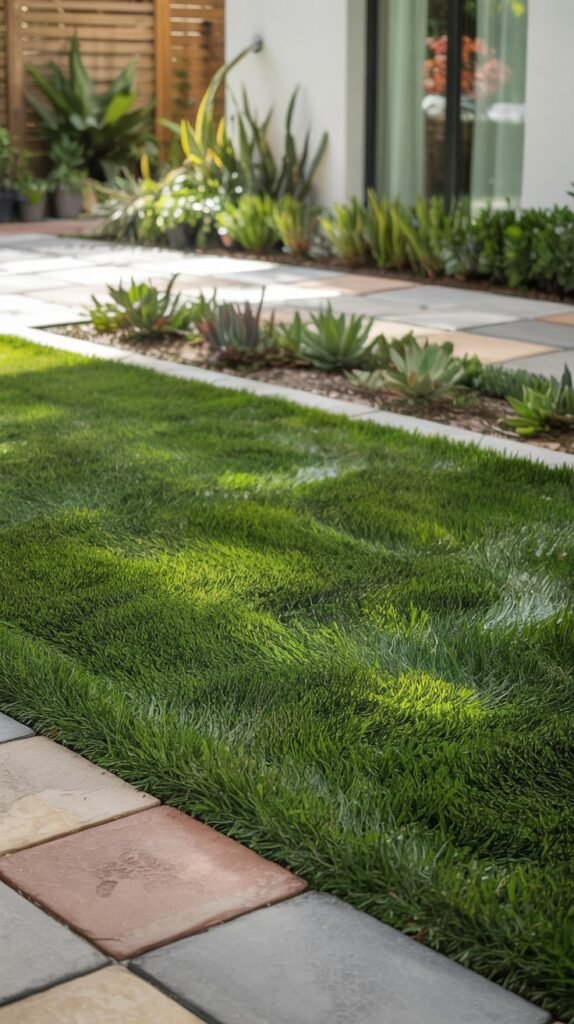
For homeowners seeking the look of a perfect lawn with absolutely zero maintenance, artificial turf offers a compelling solution. Today’s synthetic options are far more realistic and environmentally friendly than older versions, providing a consistently green, weed-free surface year-round.
Types of Artificial Turf
Polyethylene Turf
The most natural-looking option with soft, non-abrasive blades in varied heights and colors. Ideal for families and pets with excellent durability and realistic appearance.
Lifespan: 15-20 years
Feel: Soft, natural
Best for: Family yards, pet areas
Nylon Turf
The most durable option that can withstand heavy traffic and extreme temperatures. Slightly less natural-looking but offers superior longevity for high-use areas.
Lifespan: 20+ years
Feel: Firmer, resilient
Best for: Play areas, high-traffic zones
Polypropylene Turf
The most affordable option with decent appearance but less durability. Good for light-use decorative areas where budget is a primary concern.
Lifespan: 8-10 years
Feel: Less natural, economical
Best for: Low-traffic decorative areas
Advantages of Artificial Turf
- Zero mowing, watering, or fertilizing required
- Consistent appearance year-round
- Excellent for high-traffic areas and play spaces
- No mud, bare spots, or seasonal dormancy
- Pet-friendly options available with proper drainage
- Works in any climate or sun exposure
Limitations of Artificial Turf
- Highest initial installation cost
- Can become hot in direct sunlight
- Requires occasional rinsing to remove dust/debris
- Limited environmental benefits compared to living alternatives
- Eventually needs replacement (8-20 years)
- May be restricted by some HOAs
Installation Basics for Artificial Turf
- Remove existing vegetation and 3-4 inches of soil.
- Install a base layer of crushed stone or decomposed granite.
- Add weed barrier fabric to prevent growth from below.
- Lay artificial turf and secure edges with stakes or landscape nails.
- Add infill material (sand or rubber) to help blades stand upright.
- Brush turf to distribute infill and create a natural appearance.
Professional Installation Recommended: While DIY installation can save money, improper base preparation can lead to drainage issues, uneven surfaces, and premature wear. For best results, consider professional installation, which typically takes 2-3 days for an average yard.
Side-by-Side Comparison of No-Mow Lawn Alternatives

| Feature | Native Groundcovers | Moss Lawn | Artificial Turf |
| Initial Cost (per sq. ft.) | $1-$4 (seeds) $3-$8 (plugs) | $2-$5 (fragments) $5-$10 (sheets) | $8-$15 (materials) $15-$25 (professional install) |
| Annual Maintenance Cost | $0-$50 | $0-$30 | $0-$100 |
| Water Requirements | Low (establishment only) | Medium (during dry periods) | Very Low (occasional rinsing) |
| Foot Traffic Tolerance | Light to Moderate | Very Light | Heavy |
| Lifespan | Indefinite with proper care | Indefinite with proper care | 8-20 years |
| Environmental Benefits | High (supports pollinators, improves soil) | Medium (filters water, prevents erosion) | Low (reduces water use) |
| Maintenance Tasks | Occasional weeding, trimming edges | Debris removal, occasional weeding | Rinsing, brushing, infill replenishment |
| Best Climate Zones | Varies by species (3-10) | Humid, shaded areas (3-10) | All climate zones |
Regional Considerations for No-Mow Alternatives
Northeast & Midwest
Best Options: Clover, creeping thyme, moss (for shady areas)
Challenges: Cold winters, seasonal temperature fluctuations
Tips: Choose cold-hardy varieties that can withstand freeze-thaw cycles. Moss works exceptionally well in shaded areas with acidic soil.
Southeast & Gulf Coast
Best Options: Dwarf mondo grass, creeping Jenny, native sedges
Challenges: High humidity, heavy rainfall, potential for invasive spread
Tips: Focus on humidity-tolerant options and consider containment strategies for aggressive spreaders like creeping Jenny.
Southwest & West Coast
Best Options: Stonecrop, thyme, native succulents, buffalo grass
Challenges: Drought conditions, water restrictions, intense sun
Tips: Prioritize extreme drought tolerance and consider xeriscaping principles with decorative rock between plantings.
Local Expertise Matters: Before making a final decision, consult with your local extension office or native plant society for region-specific recommendations. Native plants adapted to your exact microclimate will always perform best with minimal maintenance.
Maintenance Comparison: Traditional Lawn vs. No-Mow Alternatives
Seasonal Maintenance Calendar
| Season | Traditional Lawn | Native Groundcovers | Moss Lawn | Artificial Turf |
| Spring | Dethatching, aeration, fertilizing, weed control, weekly mowing | Light weeding, edge trimming | Debris removal, occasional weeding | Thorough rinsing, brushing |
| Summer | Weekly mowing, frequent watering, pest control, fertilizing | Occasional watering during drought | Occasional watering during drought | Occasional rinsing |
| Fall | Weekly mowing, leaf removal, fertilizing, overseeding | Leaf removal | Leaf and debris removal | Leaf removal, brushing |
| Winter | Equipment maintenance, planning for spring | None | None | None |
Recommendations for Different Homeowner Scenarios
Budget-Conscious Homeowner
Best Option: Clover or native groundcover from seed
Why: Low initial cost, minimal long-term maintenance, and natural self-renewal make these the most economical choices.
Implementation Tip: Start with a small area and expand gradually to spread the cost over multiple seasons. Consider mixing clover with existing lawn for a transitional approach.
Eco-Friendly Enthusiast
Best Option: Mixed native groundcovers with pollinator-friendly species
Why: Creates biodiversity, supports local ecosystems, and eliminates the need for chemical inputs and gas-powered equipment.
Implementation Tip: Research native plant societies in your area for species recommendations and potential plant swaps or sales for cost savings.
Ultra-Low Maintenance Seeker
Best Option: Artificial turf or strategic hardscaping with container gardens
Why: Provides the most consistent appearance with virtually zero ongoing maintenance requirements.
Implementation Tip: Invest in professional installation for artificial turf to ensure proper drainage and longevity. Consider zoning your yard with hardscaping in high-traffic areas.
Reclaim Your Weekends with No-Mow Lawn Alternatives
Traditional lawns have their place, but for busy homeowners seeking to reclaim their time while maintaining an attractive landscape, no-mow alternatives offer compelling benefits. Whether you choose the eco-friendly approach of native groundcovers, the woodland charm of moss, or the ultra-low maintenance of artificial turf, you’ll enjoy significant time savings and reduced resource consumption.
The perfect solution depends on your specific needs, climate, budget, and aesthetic preferences. Many homeowners find that a mixed approach, using different alternatives in different areas of their yard, provides the best balance of functionality, appearance, and maintenance requirements.
Whichever path you choose, saying goodbye to your mower might just be the landscaping decision that gives you back your weekends and creates a more sustainable, unique outdoor space for years to come.
Frequently Asked Questions About No-Mow Lawn Alternatives
How long does it take to establish a no-mow lawn alternative?
Establishment times vary by option: Native groundcovers typically take 1-2 growing seasons to fully fill in, moss lawns require 3-6 months of consistent moisture to establish, while artificial turf provides instant results after installation. Weather conditions and proper site preparation significantly impact establishment timeframes.
Are no-mow alternatives pet-friendly?
Many no-mow alternatives are pet-friendly, but considerations vary: Clover and most native groundcovers are non-toxic to pets but may not withstand heavy dog traffic or digging. Artificial turf designed specifically for pets includes enhanced drainage and antimicrobial properties. Moss is too delicate for pet areas. Always research specific plant toxicity if you have pets.
Will my HOA allow no-mow lawn alternatives?
HOA regulations vary widely. Some have embraced sustainable landscaping while others maintain strict traditional lawn requirements. Review your HOA covenants carefully before making changes. Consider presenting a professional design plan and emphasizing the neat, intentional appearance of your proposed alternative. Many states have passed laws supporting water-wise landscaping that may override certain HOA restrictions.
Can I convert just part of my lawn to a no-mow alternative?
Absolutely! Many homeowners start with problematic areas (shady spots, steep slopes) or create defined beds of no-mow alternatives surrounded by traditional lawn or hardscaping. This gradual approach allows you to experiment with different options while maintaining some familiar lawn areas. Use clear edging or borders to create intentional separation between different landscape zones.
