Year-Round Flower Hanging Baskets Bursting With Color

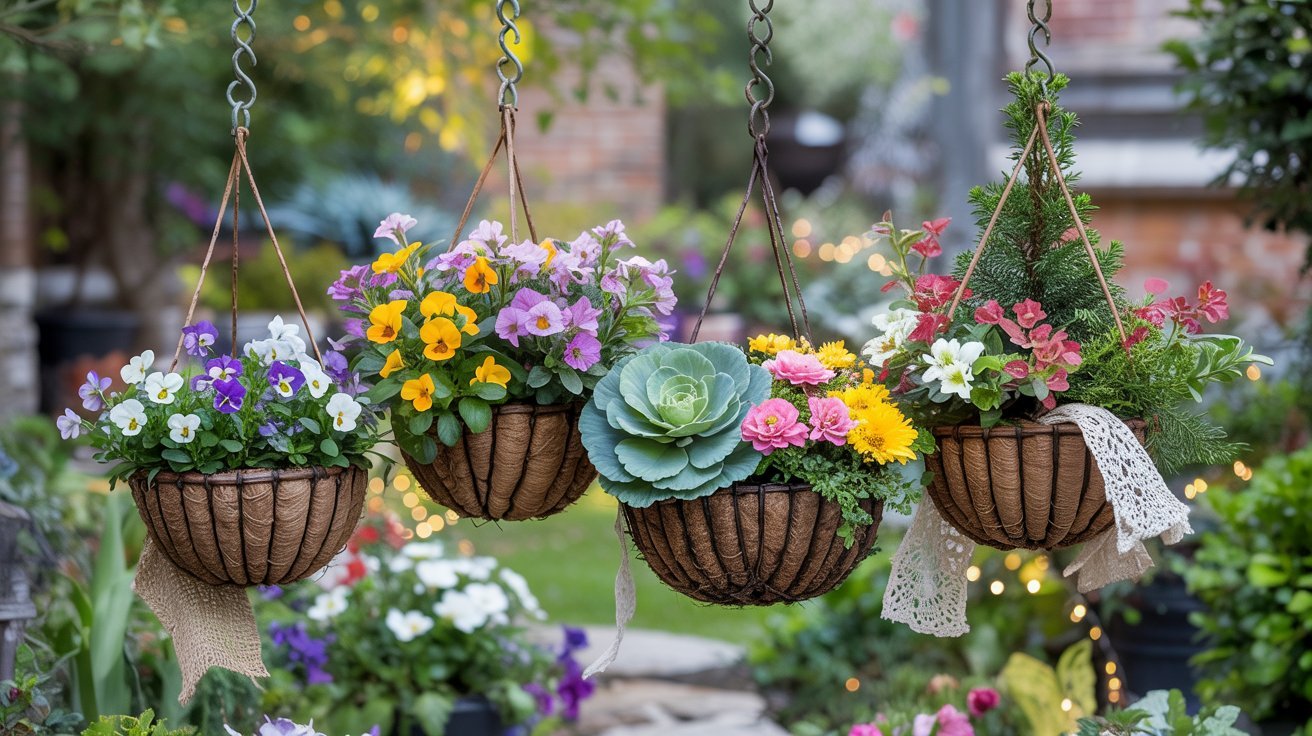
Imagine stepping outside to be greeted by gorgeous hanging baskets bursting with color and texture, not just in summer, but throughout the entire year. The secret to this continuous display isn’t magic; it’s strategic seasonal rotation. By planning your flower hanging basket transitions, you can enjoy stunning aerial gardens that evolve with the changing seasons, keeping your outdoor space fresh and vibrant no matter the weather.
In this guide, we’ll walk through a complete year-round hanging basket rotation plan, including specific plant combinations, swap-out schedules, and care tips for each season. Whether you’re dealing with summer heat, fall transitions, or winter frost, you’ll discover how to keep your hanging baskets looking their absolute best all year long.
Benefits of Seasonal Hanging Basket Rotation
Rotating your hanging baskets seasonally ensures year-round color and interest
- Continuous visual interest without gaps between seasons
- Healthier plants that thrive in their ideal temperature conditions
- More efficient water usage by matching plants to seasonal rainfall
- Extended enjoyment of your outdoor space throughout the year
- Opportunity to experiment with different color schemes and textures
- Better value from your gardening investment with constant displays
The most successful gardeners plan their hanging baskets in seasonal blocks, much like planning a wardrobe. Just as you wouldn’t wear the same clothes year-round, your hanging baskets benefit from seasonal refreshes that keep them looking their best through changing conditions.
Spring Hanging Basket Guide: Fresh Beginnings
As winter retreats and temperatures begin to rise, it’s time to welcome spring with baskets full of cheerful, cool-weather loving plants. Spring baskets should be designed to withstand occasional frost while bringing much-needed color after winter’s dormancy.
Spring Planting Timeline
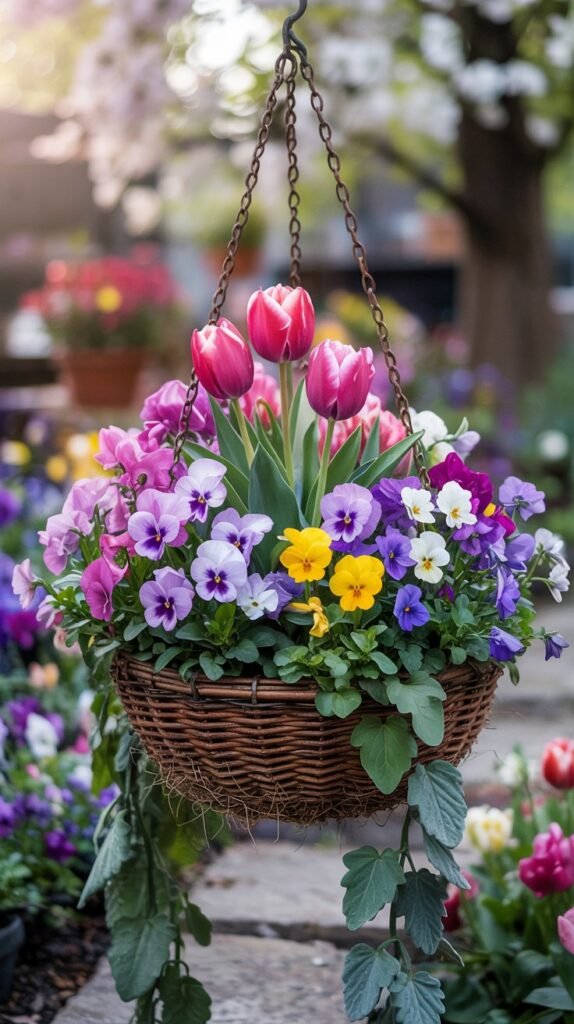
For most regions in the United States, prepare your spring baskets in late February to early March for hanging in mid-March through May. In colder northern regions, delay by 2-3 weeks; in southern zones, you can start 2-3 weeks earlier.
Spring Thriller, Filler, and Spiller Combinations
Thrillers (Center/Height)
- Tulips and daffodils (pre-grown)
- Hyacinths for fragrance
- Ornamental kale for texture
- Primrose for bright pops of color
Fillers (Mid-level/Volume)
- Pansies and violas in complementary colors
- Sweet alyssum for delicate texture
- Forget-me-nots for true blue color
- Dusty miller for silver foliage contrast
Spillers (Edges/Trailing)
- Creeping Jenny for chartreuse trails
- Trailing lobelia for cascading blue
- Ivy varieties for elegant draping
- Bacopa for delicate white flowers
Spring Basket Care Tips
Spring baskets require vigilant protection from late frosts while also preparing for warming temperatures:
- Water when the top inch of soil feels dry, typically every 2-3 days
- Bring baskets inside or cover during unexpected frost warnings
- Feed with a balanced liquid fertilizer every two weeks
- Deadhead spent blooms regularly to encourage continuous flowering
- Position in part sun locations as spring progresses to avoid scorching
Summer Hanging Basket Strategy: Heat-Tolerant Beauties
By late May to early June, it’s time to transition to heat-loving summer plants that can withstand the intensity of summer sun and potential drought conditions. Summer baskets should be designed for both beauty and resilience.
Summer Transition Timeline
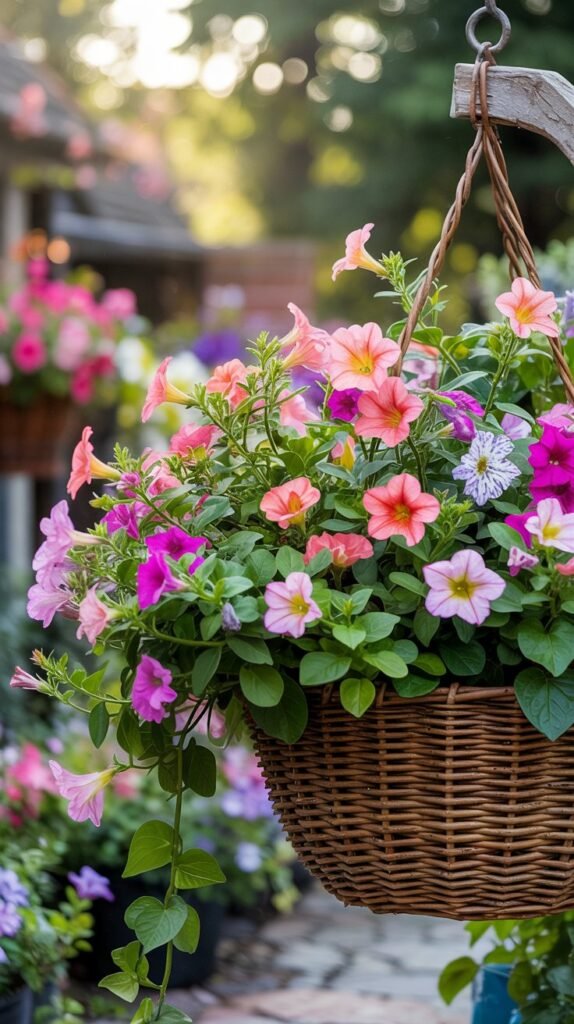
Begin preparing summer baskets in mid-May, allowing them to establish before the real heat arrives. By early June, your spring baskets will likely be fading, making it the perfect time for the seasonal swap. These baskets should carry you through until September.
Summer Thriller, Filler, and Spiller Combinations
Thrillers (Center/Height)
- Angelonia for heat-loving vertical interest
- Ornamental grasses for movement
- Caladium for dramatic foliage
- Upright geraniums for reliable color
Fillers (Mid-level/Volume)
- Lantana for butterfly attraction
- Pentas for hummingbird visits
- Scaevola for heat tolerance
- Euphorbia ‘Diamond Frost’ for airy texture
Spillers (Edges/Trailing)
- Calibrachoa (Million Bells) for non-stop blooms
- Trailing petunias for dramatic cascades
- Sweet potato vine for foliage interest
- Trailing verbena for heat-resistant color
Summer Basket Maintenance Secrets
Summer baskets require diligent care to thrive through heat waves and dry spells:
“I solemnly do swear that I will place this plant in its proper light requirements, to never allow it to dry to wilt point and to water it as is needed on a daily basis. I will feed it regularly for optimum blooms and will pinch it back when needed to keep it healthy and blooming all summer long.”
Summer basket care pledge from experienced gardeners
- Water daily during hot weather, possibly twice daily during heat waves
- Add water-retaining polymer crystals to the soil mix when planting
- Feed weekly with a bloom-boosting fertilizer (higher phosphorus)
- Provide afternoon shade in extremely hot climates
- Trim back leggy growth to encourage bushier plants
Fall Hanging Basket, Rich Autumn Hues
As summer heat begins to wane, it’s time to refresh your hanging baskets with plants that thrive in cooler temperatures and showcase the rich colors of autumn. Fall baskets bring a warm, cozy feeling to your outdoor spaces as the days grow shorter.
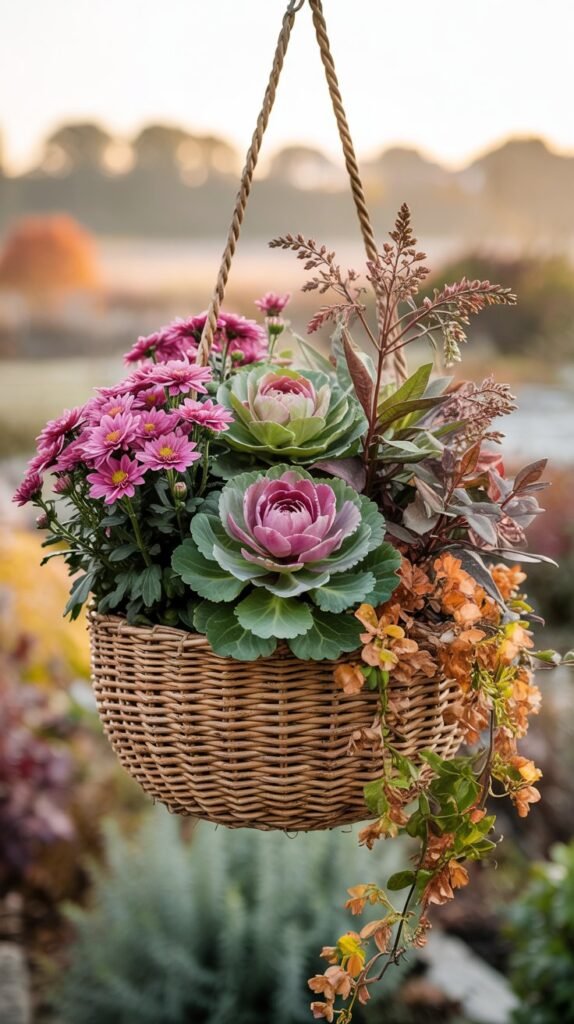
Fall Transition Timeline
Begin preparing your fall baskets in late August, allowing them to establish before hanging in mid-September. These baskets should provide color and interest through November in most regions, sometimes longer in milder climates.
Fall Thriller, Filler, and Spiller Combinations
Thrillers (Center/Height)
- Ornamental cabbage and kale
- Upright sedums for structure
- Tall grasses with autumn plumes
- Bronze fennel for feathery texture
Fillers (Mid-level/Volume)
- Chrysanthemums in autumn hues
- Pansies for cool-weather color
- Heuchera for colorful foliage
- Asters for late-season blooms
Spillers (Edges/Trailing)
- Variegated ivy for elegant trails
- Wire vine for delicate texture
- Trailing snapdragons for unexpected blooms
- Golden creeping Jenny for warm color
Fall Basket Care Considerations
Fall baskets require different care as temperatures fluctuate and days shorten:
- Reduce watering frequency as temperatures cool
- Switch to a lower-nitrogen fertilizer to prevent leggy growth
- Protect from early frosts by bringing baskets in overnight
- Position in full sun as light levels decrease
- Remove summer annuals that look tired and replace with fresh fall plants
Winter Hanging Basket Survival: Extending the Season
Even in colder climates, hanging baskets can provide winter interest with the right plant selection and protection. Winter baskets focus on texture, structure, and evergreen elements rather than abundant blooms.
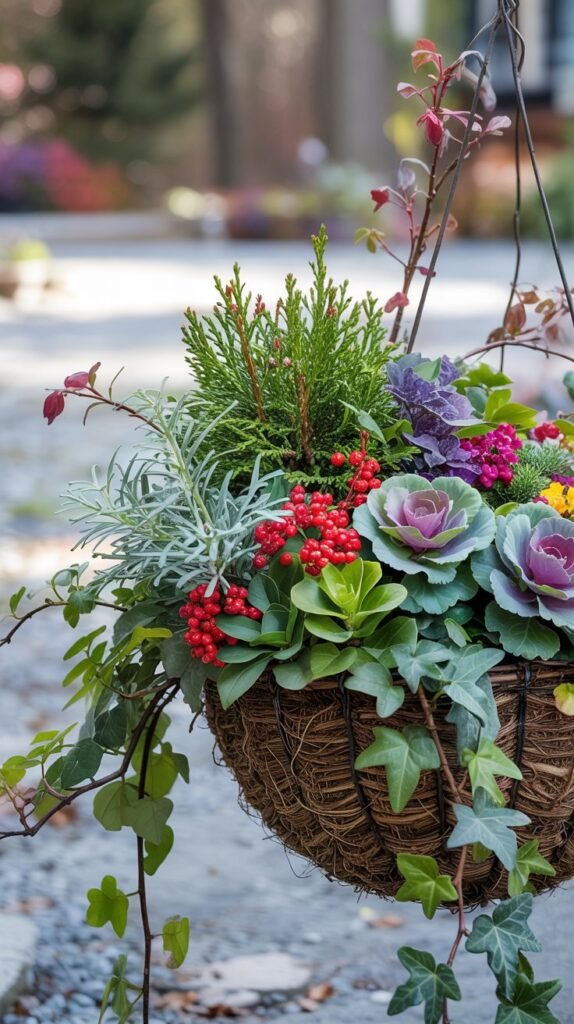
Winter Transition Timeline
Prepare winter baskets in late October to early November, before hard freezes occur. In milder climates, these can last through February; in colder regions, focus on December holiday displays with more limited duration.
Winter Thriller, Filler, and Spiller Combinations
Thrillers (Center/Height)
- Dwarf evergreen branches
- Red twig dogwood stems
- Winterberry holly for bright berries
- Ornamental cabbage for cold hardiness
Fillers (Mid-level/Volume)
- Heuchera for evergreen foliage
- Winter pansies in protected areas
- Carex sedge for texture and movement
- Dusty miller for silver highlights
Spillers (Edges/Trailing)
- Trailing ivy varieties (especially variegated)
- Vinca minor for evergreen trails
- Ajuga for cold-hardy foliage
- Trailing rosemary in milder climates
Winter Basket Protection Strategies
Winter baskets require special care to survive freezing temperatures:
- Line baskets with burlap or bubble wrap for insulation
- Water only when soil is thawed and dry
- Position in sheltered locations away from harsh winds
- Consider bringing baskets inside during extreme cold snaps
- Avoid fertilizing during winter months
Regional Tip: In zones 7 and warmer, many “winter” baskets can include blooming plants like cyclamen, pansies, and even certain perennials. In zones 3-6, focus more on evergreen elements, berries, and structural components that can withstand freezing temperatures.
Container Care Between Seasonal Rotations
Proper preparation between seasonal changes ensures your hanging baskets remain healthy and beautiful year after year. Taking time to refresh containers between plantings pays dividends in plant health and visual appeal.
Between-Season Checklist
- Remove all plant material from previous season
- Clean basket thoroughly with a 10% bleach solution
- Check and repair any basket damage
- Replace coco liner if deteriorated
- Add fresh potting mix with appropriate amendments
- Inspect hanging hardware for safety
Soil Mix Recommendations
- Spring Mix: Lighter mix with good drainage
- Summer Mix: Add water-retaining polymers and extra compost
- Fall Mix: Standard potting mix with slow-release fertilizer
- Winter Mix: Add extra perlite for drainage in wet conditions
Pro Tip: Keep a “nursery area” in your yard where you can grow the next season’s baskets while current ones are still on display. This allows new plants to establish before taking center stage, ensuring continuous color without gaps between seasons.
Year-Round Hanging Basket Planting Calendar
Use this monthly guide to plan your hanging basket rotations throughout the year. Adjust timing by 2-3 weeks earlier for southern zones (8-10) and 2-3 weeks later for northern zones (3-5).
Monthly planting calendar for year-round hanging basket success (Zone 6 reference)
| Month | Primary Tasks | Basket Status | Planning Ahead |
| January | Maintain winter baskets, order spring seeds | Winter displays | Start planning spring combinations |
| February | Start spring seeds indoors, prepare baskets | Winter displays | Purchase spring plants as available |
| March | Plant spring baskets, harden off seedlings | Transition to spring | Monitor for late frosts |
| April | Maintain spring baskets, fertilize regularly | Spring displays | Start summer seeds |
| May | Prepare summer baskets, monitor temperatures | Spring displays | Purchase summer plants |
| June | Transition to summer baskets, increase watering | Summer displays | Monitor for heat stress |
| July | Daily watering, weekly feeding, deadheading | Summer displays | Order fall seeds/plants |
| August | Maintain summer baskets, prepare fall containers | Summer displays | Start fall plants in nursery area |
| September | Transition to fall baskets, adjust watering | Fall displays | Monitor for early frosts |
| October | Maintain fall baskets, prepare winter elements | Fall displays | Collect evergreen materials |
| November | Transition to winter baskets, protect from freezes | Winter displays | Order spring seeds |
| December | Maintain winter baskets, add holiday elements | Winter displays | Review year’s successes and plan improvements |
Regional Considerations for Seasonal Hanging Baskets
While the general principles of seasonal rotation apply everywhere, your specific climate zone requires adjustments to timing and plant selection. Here’s how to adapt these recommendations to your region. Adjust your hanging basket strategy based on your USDA hardiness zone
Northern Regions (Zones 3-5)
- Delay spring planting until threat of frost passes
- Focus on heat-loving plants for shorter summer
- Transition to fall baskets by early September
- Winter baskets may be limited to holiday displays
- Consider bringing baskets indoors during extreme cold
Middle Regions (Zones 6-7)
- Follow the standard calendar with minor adjustments
- Extend fall displays into November
- Winter baskets can include some hardy flowering plants
- Provide afternoon shade for summer baskets
- Monitor spring baskets for late frost damage
Southern Regions (Zones 8-10)
- Start spring baskets 2-3 weeks earlier
- Focus on extreme heat tolerance for summer
- Extend fall planting into November
- Winter baskets can include many flowering plants
- Provide extra water for summer baskets
Climate Change Note: Traditional planting calendars may need adjustment as weather patterns shift. Keep records of your local last and first frost dates, summer heat waves, and rainfall patterns to fine-tune your rotation schedule over time.
Creating Your Year-Round Hanging Basket Rotation Plan
Maintaining beautiful hanging baskets throughout the year isn’t about having a green thumb, it’s about strategic planning and understanding seasonal needs. By rotating your baskets with the seasons and preparing for transitions before they’re needed, you can enjoy continuous color and texture in your outdoor spaces.
Remember that the key to year-round success is planning ahead, always be preparing your next seasonal basket while enjoying your current display. This approach ensures seamless transitions and continuous beauty without gaps between seasons.
With the thriller, filler, and spiller combinations we’ve provided for each season, along with the monthly planting calendar, you now have a complete blueprint for creating stunning hanging baskets that evolve with the changing seasons. Your outdoor space will remain vibrant and welcoming all year long, becoming a source of pride and joy no matter the weather.
